The Hidden Cost of Security Theatre: RCMP’s $30 Million Drone Dilemma and the Case for Canadian Drone Industry Investment
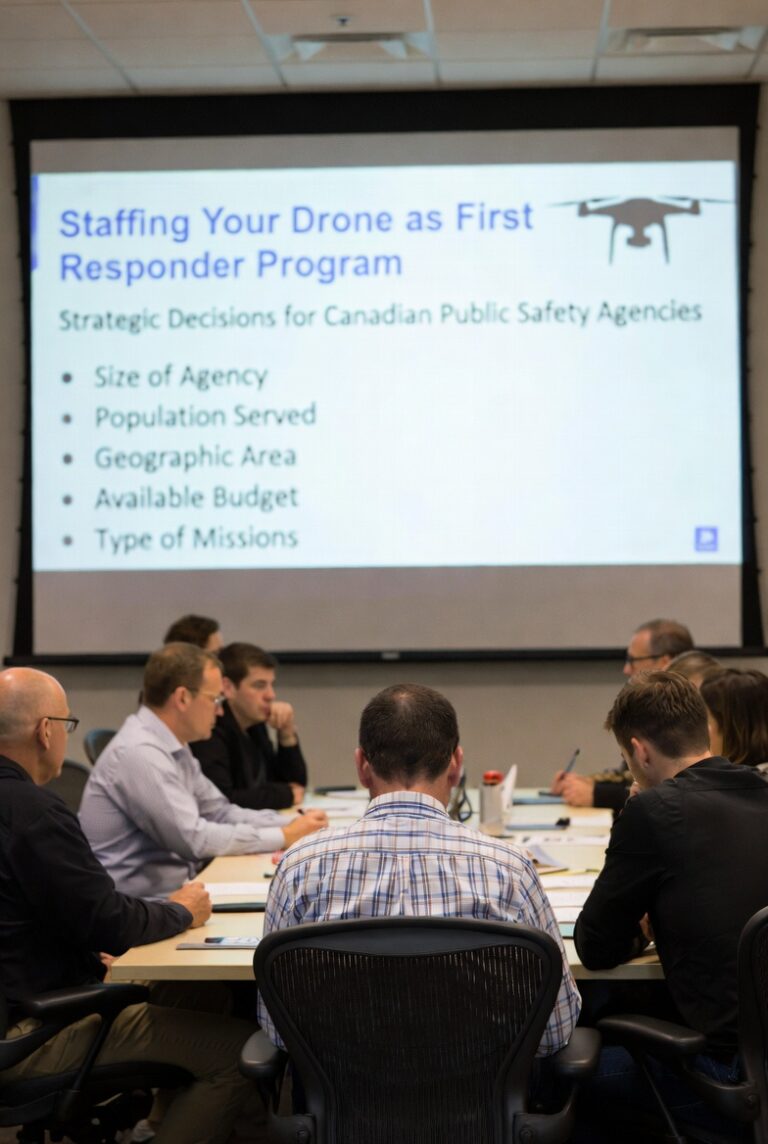
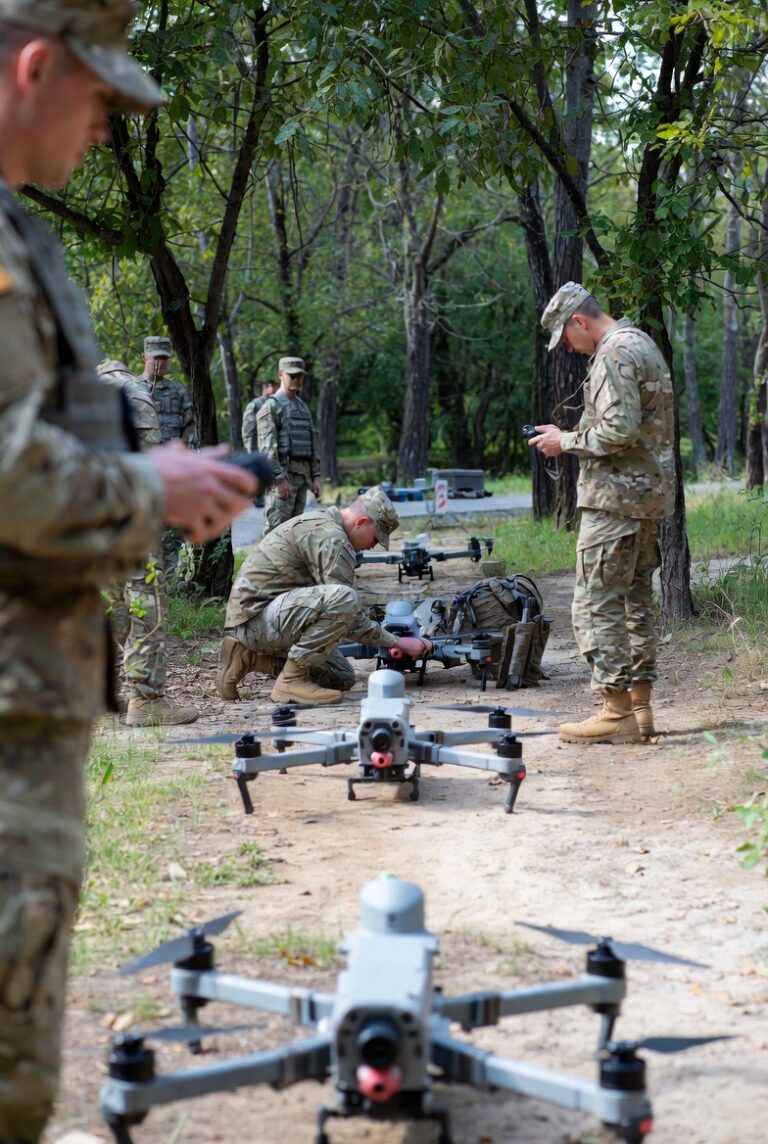
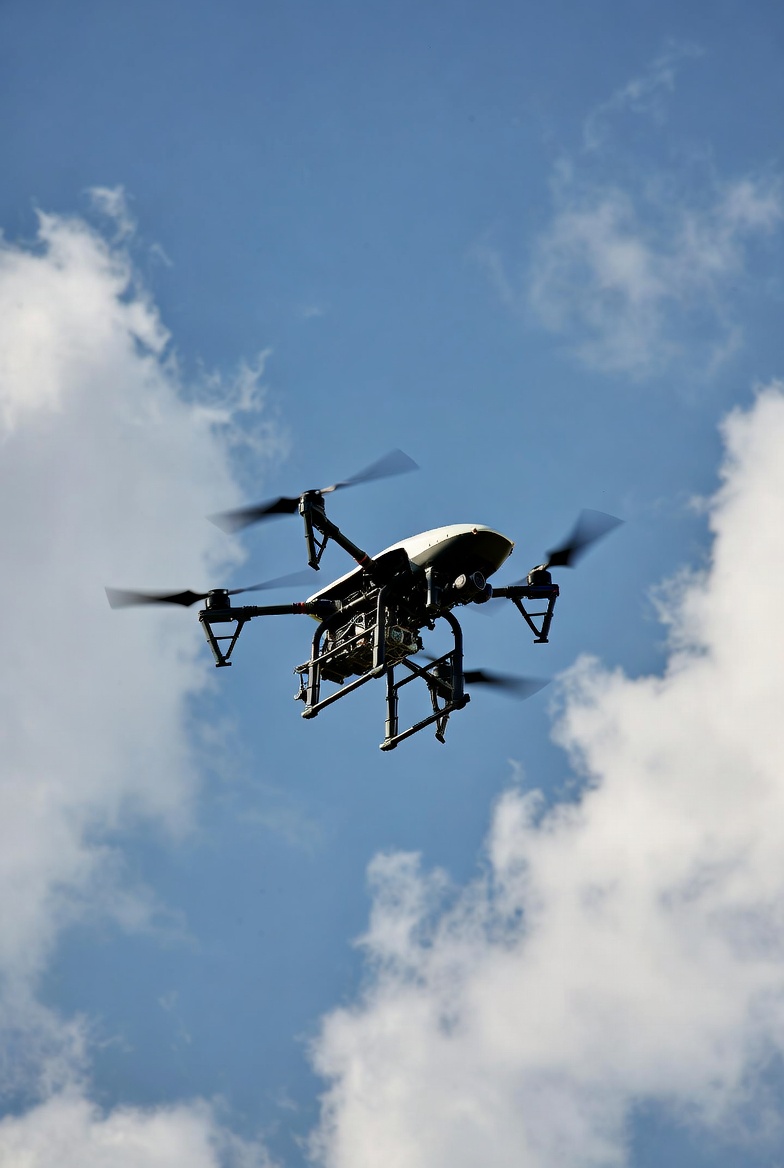
The Royal Canadian Mounted Police recently revealed that 80 percent of its 1,230-drone fleet consists of Chinese-manufactured equipment now deemed to present high security risks. The RCMP faces a $30 million replacement cost for these 973 Chinese drones, as non-Chinese alternatives cost nearly double. This situation exemplifies a troubling pattern: Canadian public safety agencies purchasing foreign drone technology without consideration for strategic needs, security implications, or domestic industry support, then scrambling to implement restrictions after the fact.
Beyond the Price Tag
While the $30 million replacement estimate captures headlines, the true cost runs deeper. Wesley Wark of the Centre for International Governance Innovation noted that the RCMP appears to have purchased these drones without much thought to strategic needs or security issues. Transport Canada data reveals Canada’s commercial drone market reached $1.5 billion in 2024 and projects growth to $5.1 billion by 2030. Yet despite this thriving domestic industry, the RCMP operates zero Canadian-manufactured drones for sensitive operations, instead relying on 112 French, 96 American, and 24 Belgian systems. This raises a fundamental question: why are Canadian tax dollars flowing to foreign manufacturers when viable domestic alternatives exist?
Canadian Manufacturing Capability
Canada possesses robust drone manufacturing capability that remains systematically excluded from federal procurement considerations. Canadian companies manufacture commercial and military-grade systems, provide defense contracting services, and operate advanced Beyond Visual Line of Sight operations under Transport Canada oversight. Despite these capabilities, Canadian manufacturers face significant barriers. Small and medium enterprises struggle to secure research and development funding necessary to compete with established international manufacturers. The absence of preferential procurement policies creates a vicious cycle: domestic manufacturers cannot achieve scale without government contracts, yet cannot secure contracts without proven scale.
Training Infrastructure and Economic Impact
Canada has established a progressive regulatory framework under Transport Canada with over 100,000 certified drone pilots operating as of 2024. The November 4, 2025 regulatory updates introduced routine BVLOS operations for drones up to 150 kilograms, positioning Canada as a leader in unmanned aircraft integration. This regulatory sophistication represents a strategic national asset that remains underutilized.
The Canadian drone market demonstrates robust growth potential. Agriculture drones are projected to reach $999 million by 2030 with 25.4 percent annual growth. Military applications are expected to reach $7.5 billion by 2030, growing at 16 percent annually. The overall market is forecast to expand from $3.6 billion in 2024 to $15.5 billion by 2035. Federal procurement decisions significantly influence this trajectory. When agencies purchase exclusively from foreign manufacturers, they signal that Canadian drone technology development receives no preferential consideration, undermining the business case for domestic innovation.
Balancing Security and Industrial Strategy
The RCMP’s situation illustrates the false economy of prioritizing upfront cost savings over strategic considerations. Chinese manufacturers, particularly DJI which controls three-quarters of Canadian drone market revenue, achieve cost advantages through massive scale. However, these benefits carry hidden expenses: security vulnerabilities requiring operational restrictions, lack of sovereign control over critical technology, and missed opportunities to develop domestic capability.
Ygal Bendavid of Université du Québec à Montréal noted that any connected device raises security questions. The concern extends beyond country of origin to encompass thousands of components whose provenance cannot be definitively established. This suggests that perfect security through hardware sourcing remains elusive. Instead, comprehensive risk management requires combining thoughtful procurement with robust operational protocols and continuous security monitoring.
Canadian manufacturers operating under Transport Canada oversight offer distinct advantages. Their systems can be designed from inception to meet Canadian security requirements. Their supply chains can be audited to Canadian standards. Their development teams can be vetted through existing Controlled Goods Program protocols. Most importantly, procurement partnerships with Canadian manufacturers build domestic technological capability that strengthens national security rather than creating perpetual dependency on foreign suppliers.
Policy Recommendations
Addressing these challenges requires coordinated action. Federal agencies should implement preferential procurement policies for Canadian-manufactured drone technology when technically viable alternatives exist. Government should expand research and development support through targeted Innovation, Science and Economic Development Canada programs, with particular focus on technologies addressing capability gaps in public safety and defense applications. Transport Canada’s progressive regulatory framework positions Canada advantageously, but regulatory leadership alone cannot overcome competitive disadvantages against subsidized foreign competitors. Strategic procurement coupled with research support and export promotion can leverage Canada’s regulatory advantages while building domestic industrial capacity.
Conclusion
The RCMP’s $30 million drone replacement challenge exemplifies a broader failure to integrate security considerations, industrial policy, and long-term strategic thinking in technology acquisition. As Wesley Wark observed, mitigation after the fact is always a second-best option. Canada’s drone industry possesses the technical capability, regulatory sophistication, and operational experience to support public safety and defense requirements. What it lacks is strategic commitment from federal procurement decision-makers who too often prioritize short-term cost savings over long-term capability development. With the Canadian drone market projected to reach $15.5 billion by 2035, the economic opportunity is substantial. The question is whether Canadian tax dollars will continue flowing to foreign manufacturers or begin building domestic capability that enhances both security and prosperity.
References
- CBC News. (2025, December 2). RCMP restricts use of Chinese-made drones — the vast majority of its fleet. Retrieved from https://www.cbc.ca/news/politics/rcmp-restricts-chinese-drones-9.6999268
- DroneXL. (2025, December 2). RCMP’s $30 million drone dilemma exposes North America’s Chinese drone dependency. Retrieved from https://dronexl.co/2025/12/02/rcmp-30-million-drone-dilemma/
- Grow Trade Consulting. (2025, May 21). Canada market spotlight: drones. Retrieved from https://growtrade.ca/2025/05/21/canada-market-spotlight-drones/
- Grand View Research. (2024, August 28). Canada drone market size & outlook, 2024-2030. Retrieved from https://www.grandviewresearch.com/horizon/outlook/drone-market/canada
- Grand View Research. (2024, October 28). Canada commercial drone market size & outlook, 2030. Retrieved from https://www.grandviewresearch.com/horizon/outlook/commercial-drone-market/canada
- Grand View Research. (2025, April 8). Canada military drone market size & outlook, 2024-2030. Retrieved from https://www.grandviewresearch.com/horizon/outlook/military-drone-market/canada
- Market Research Future. (2025, March 26). Canada drones market size, share, trends by 2035. Retrieved from https://www.marketresearchfuture.com/reports/canada-drones-market-44633