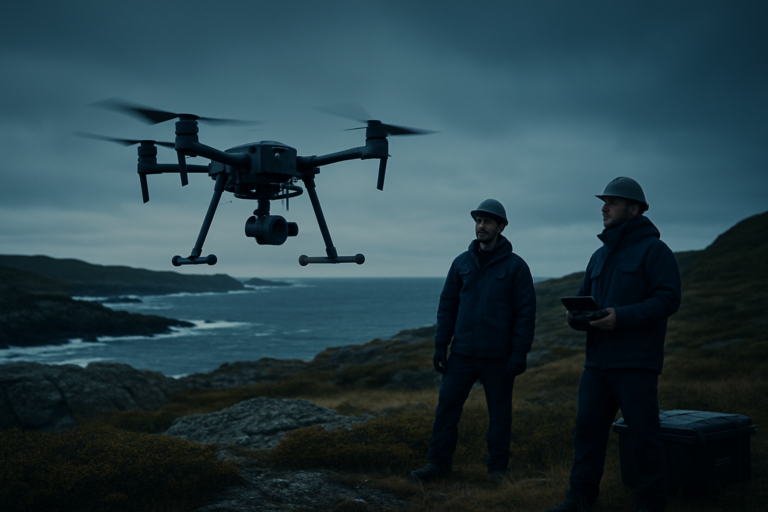
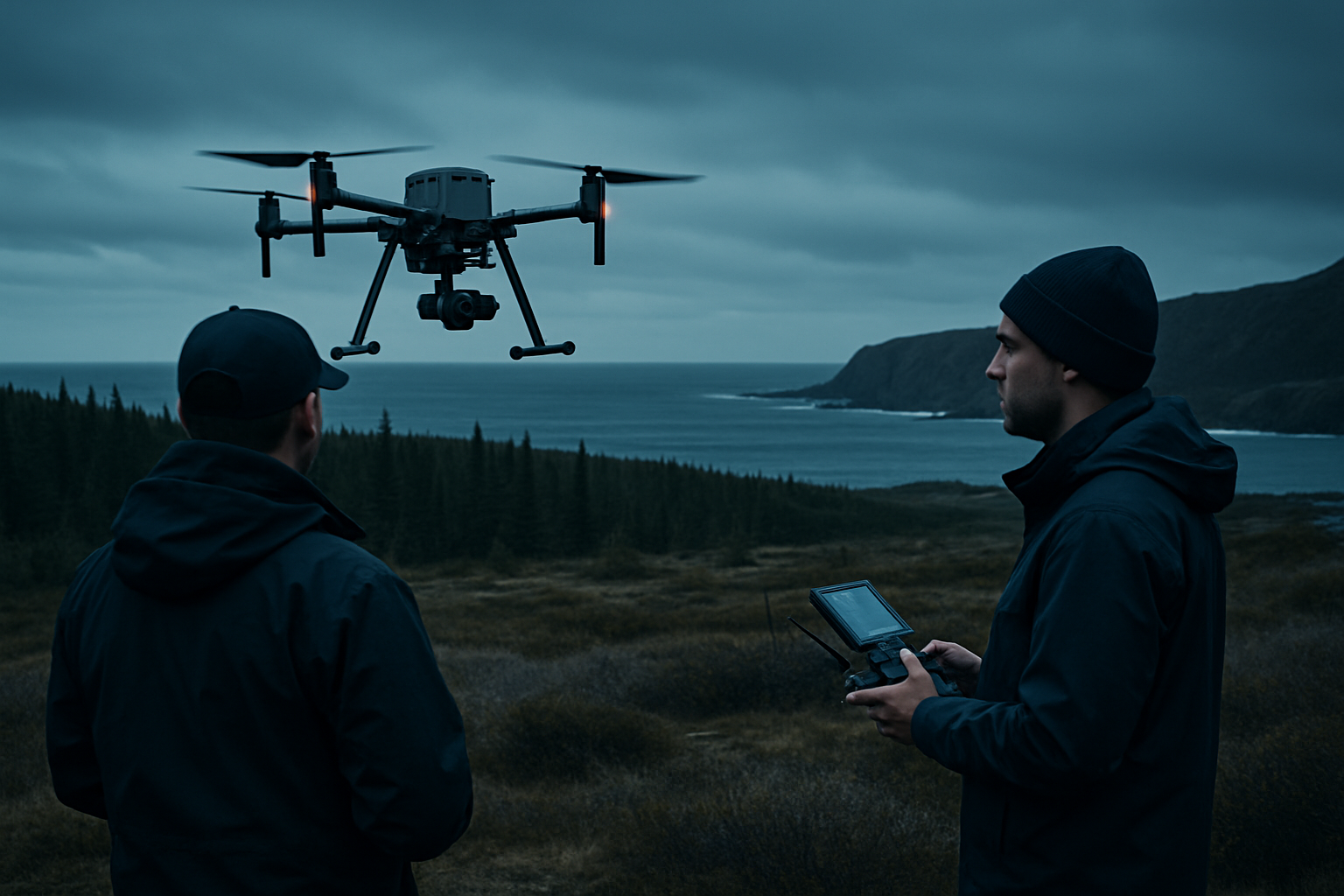
The Visual Observer Requirement Is Not Optional. Most BVLOS Programs Are Getting It Wrong.
Transport Canada’s RPOC framework requires operators to define every crewmember’s responsibilities before a BVLOS flight is approved. Most operators read that requirement and think about their remote pilot in command. Almost none of them think hard enough about the Visual Observer. That gap — between regulatory intent and operational reality — is where Canadian BVLOS programs are quietly failing before they fly a single mission.
The VO Role Has Legal Weight That Most Operators Are Ignoring
Under Transport Canada’s Remotely Piloted Aircraft Systems regulations, BVLOS operations conducted under an RPOC require operators to document crew composition, duties, and qualifications in an approved operations manual. The Visual Observer is not a suggested role. When a VO is named in that manual — and in most BVLOS configurations, one is required — that person is a crewmember with defined responsibilities and real authority.
That authority includes communicating conflicting traffic, calling out airspace deviations, and holding go/no-go input when visual conditions degrade. A VO who has not been trained to execute those responsibilities under operational pressure is not fulfilling the role the operations manual describes. They are filling a seat.
Transport Canada’s November 2025 regulatory amendments reinforced accountability for RPOC certificate holders. Operators are responsible for ensuring crew competency matches what their approved documentation promises. If your VO was briefed on the morning of the flight and handed a radio, your program has a compliance gap — not a training inconvenience.
The Checkbox Problem Is Structural, Not Individual
The instinct to treat the VO as a checkbox does not come from carelessness. It comes from how BVLOS programs are built. Organizations pursuing an RPOC invest heavily in getting the remote pilot qualified — the Advanced Operations exam, simulator hours, airspace familiarization, operations manual development. That investment is visible and credentialed.
VO training has no equivalent credential signal. Transport Canada does not issue a Visual Observer certificate. There is no national standard that tells an operator exactly what a VO must know or how to verify competency. That regulatory silence creates a vacuum, and operators fill it with assumption: if someone is physically present at the VO position and has a radio, the role is covered.
In Clarion’s experience training government and commercial BVLOS crews, the VO failure point is consistent across programs. Operators who have built rigorous pilot training pipelines have simultaneously assigned VO duties to site supervisors, logistics coordinators, or junior staff with no formal introduction to their crewmember responsibilities. The structural problem is that the credential system does not demand otherwise — until an incident forces the question.
What Legitimate VO Training Actually Requires
A trained Visual Observer understands four things that cannot be improvised on site. First, they know the specific visual scan pattern required to detect manned aircraft, obstacles, and airspace boundary proximity for the aircraft type and altitude being flown. Second, they understand the communication protocol — not just that they have a radio, but what to say, in what sequence, and how to transmit under time pressure without creating confusion in the cockpit. Third, they know the threat recognition hierarchy: what constitutes an immediate call to abort versus a status update. Fourth, and most critically, they understand that their go/no-go input is not advisory — it is operational authority.
None of this is complex. All of it requires deliberate instruction and at minimum a scenario-based practice session before a live BVLOS mission. Clarion’s Level 1 Complex program addresses this gap directly, treating the VO role as a crew position with a defined training track rather than an ancillary safety measure. Operators building RPOC submissions should be documenting VO training standards in their operations manuals with the same rigour they apply to remote pilot qualifications. Transport Canada’s review process will increasingly expect to see it.
The Strategic Question Your Program Cannot Defer
The RPOC framework is an organizational authorization — it places accountability for crew competency on the certificate holder, not on individual pilots. That means when a VO fails to detect a conflicting aircraft, or freezes on the radio, or defers a call they had authority to make, the accountability traces back to the operator’s training system and the operations manual that described a crewmember that was never actually built.
Transport Canada’s November 2025 amendments did not soften that accountability structure. If anything, the regulatory trajectory for BVLOS in Canada is toward greater documentation rigour and demonstrated crew competency — not less. Operators who formalized their pilot training years ago and left VO preparation informal are now carrying a structural exposure that no amount of post-incident remediation will cleanly resolve.
The VO role is where BVLOS safety cases either hold or collapse under scrutiny. The operators who recognize that now — before an incident writes the training requirement for them — are the ones whose programs will survive the next round of regulatory tightening.
Continue the Conversation
The Clarion Professional Network has an active thread on VO training standards and what operators are actually writing into their RPOC operations manuals — including where Transport Canada’s review process is pushing back hardest on crew competency documentation. If your BVLOS program has a VO gap or you are building your ops manual now, that conversation is the fastest way to benchmark against operators who have been through the RPOC process.