
In 2019 I Trained a Team That Had Been Flying Drones for Three Years. They Could Not Complete a Basic Pre-Flight.
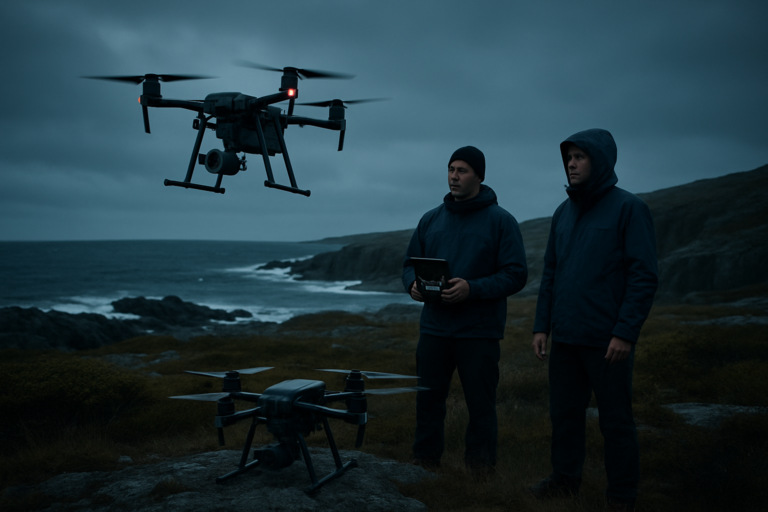
They had logbooks. They had client contracts. They had three years of missions without a recordable incident. What they did not have was a pre-flight checklist anyone could locate, agree on, or execute consistently. When I asked the team lead to walk me through site assessment, he described what he personally looked for — and his two crew members described something different. Three years of experience had produced three separate procedures that had never been compared.
Experience Is Not a Substitute for Documented Procedure
Transport Canada’s Part IX regulations — the Canadian Aviation Regulations governing Remotely Piloted Aircraft Systems — are unambiguous on this point. Operators conducting Advanced Operations are required to maintain documented operational procedures. This is not advisory language. It is a regulatory condition attached to legal flight authorization. An organization holding an RPOC (Remotely Piloted Aircraft Operator Certificate) is authorizing commercial BVLOS operations against a documented safety case. That safety case depends on procedures that exist on paper, are trained to a standard, and are executed consistently — not on the accumulated intuitions of experienced pilots.
The institutional failure Clarion encounters consistently is not recklessness. It is drift. Organizations begin operations, develop informal habits that work well enough, and never formalize them because no client required it, no regulator audited it, and no incident forced the question. The habits calcify. New team members absorb them without documentation. The organization now has a culture mistaken for a system.
What Transport Canada’s November 2025 Changes Signal
Transport Canada’s November 4, 2025 regulatory amendments to the RPAS framework tightened accountability for operators conducting complex and BVLOS operations. The direction of Canadian drone regulation has been consistent for years: the burden of demonstrating a safety case shifts progressively onto the operator. Passing Transport Canada’s Advanced Operations exam establishes that a pilot understands the regulatory framework. It does not establish that an organization has operational procedures that reflect it.
This is the gap Clarion’s training addresses directly. The Advanced Operations exam tests individual knowledge. Operational readiness requires organizational structure — crew resource management protocols, site assessment documentation, crew briefing standards, and pre-flight checklists that function as enforceable procedure rather than informal reminder. In Clarion’s experience training government and commercial clients across Canada, the teams most resistant to procedural structure are often the most experienced. Years of incident-free flying read, internally, as validation. Regulators and insurers read the same record differently when a procedural failure eventually surfaces.
The Pre-Flight Checklist Is Not a Beginner’s Tool
Aviation’s foundational insight — embedded in Transport Canada’s safety culture requirements and in every serious operator certificate framework — is that procedure exists to protect against the failure modes that experience makes invisible. Experienced pilots skip steps because the steps feel unnecessary. They feel unnecessary because nothing has gone wrong yet. This is precisely when procedural discipline matters most.
A standardized pre-flight checklist, a documented site assessment process, and a structured crew briefing are not training-wheel tools for new operators. They are the mechanisms by which an organization converts individual knowledge into institutional reliability. When crew members change, when conditions are abnormal, when the mission pressure is real — the checklist is what keeps a team from relying on whoever has the most confident opinion in the moment.
In Clarion’s experience, government operators face a particular version of this risk: procurement cycles bring in qualified pilots, but the organization’s SOPs are never updated to match. The credential is current. The procedure is not.
The Real Audit Is Not Coming from Transport Canada
Transport Canada inspections matter. RPOC audits matter. But the audit that organizations consistently underestimate is the operational one: the day a crew encounters an abnormal situation, a key team member is absent, or a client’s requirements exceed what informal habit can handle. That is when the absence of documented procedure becomes legible — not to a regulator, but to the mission.
The team I trained in 2019 left with a pre-flight checklist, a site assessment template, and a crew briefing standard. They did not leave with more experience. They left with structure that made their experience transferable, auditable, and defensible. The difference between an organization that has been flying for three years and one that is genuinely operationally mature is not the logbook. It is whether the knowledge in the room is documented well enough to survive the absence of the people who currently hold it.
The question for every operator reading this: if your most experienced pilot left tomorrow, what documented procedures would remain?
Continue the Conversation
The Clarion Professional Network has an active thread on pre-flight checklist standards for government BVLOS operations — including examples of what Transport Canada auditors have flagged in RPOC reviews. If your organization is building or auditing its SOPs right now, that is the conversation to be in.