
I Watched a Client Spend $200K on Drones and Never Fly a Single BVLOS Mission. Here Is What Went Wrong.
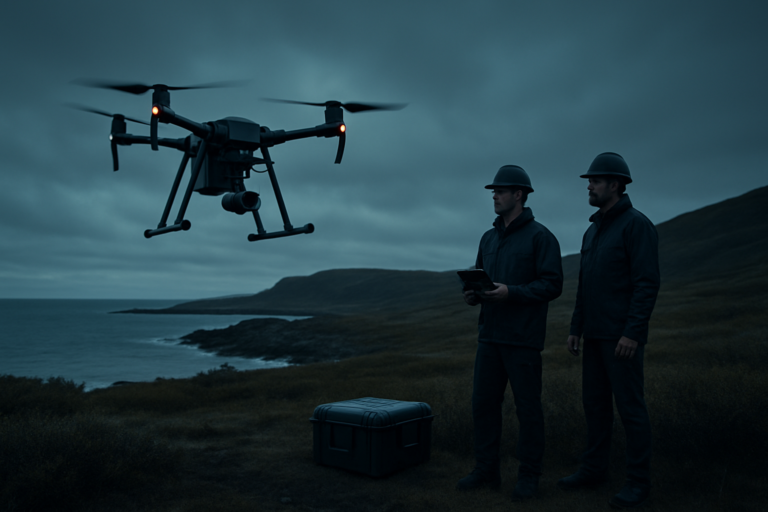
The drone arrived in a Pelican case with foam cutouts shaped like the future. The budget was approved, the hardware was procured, and someone in the organization checked the drone box. Eighteen months later, that case had never been opened for an operational BVLOS mission. The money was gone. The capability was not delivered. This is not a cautionary tale — it is the default outcome when procurement leads and training is treated as an afterthought.
The Procurement Trap
Canadian public sector and corporate procurement processes are built to evaluate and acquire hardware. They are not built to evaluate operational readiness. When a department identifies a drone requirement, the RFP goes to aircraft manufacturers and integrators. Vendors compete on sensor payload, endurance, and price. Nobody in that process is accountable for whether the organization can actually execute the mission once the aircraft arrives.
Transport Canada’s regulatory framework for Beyond Visual Line of Sight operations requires a Special Flight Operations Certificate, a compliant operations manual, demonstrated crew qualifications, and an airspace integration plan — none of which come in the Pelican case. Passing the Advanced Operations exam is a prerequisite, not a finish line. In Clarion’s experience training government clients across Northern Ontario and beyond, the gap between individual exam success and organizational BVLOS readiness is where programs stall. Procurement checks the drone box. Nobody checks the capability box. The aircraft sits.
What Transport Canada Actually Requires
Transport Canada’s Remotely Piloted Aircraft Systems regulations under the Aeronautics Act set a clear bar for BVLOS operations. An Advanced Operations credential — earned by passing TC’s Advanced Operations exam — authorizes standard operations within Visual Line of Sight for advanced category RPAs. BVLOS is a separate, more demanding authorization entirely. Operators must apply for a Special Flight Operations Certificate, submit an operations manual that satisfies TC’s published standards, and demonstrate that their crew and organization can manage the expanded risk envelope.
TC’s ongoing regulatory development work, including amendments that came into effect in late 2025, has continued to refine the BVLOS pathway, but the core requirement has not changed: you need an approved safety case, not just a qualified pilot. Organizations that build their procurement plan around getting pilots to pass an exam have misread the regulation. The exam produces certified individuals. The SFOC process produces authorized operations. These are not the same deliverable, and conflating them is how you end up with a $200,000 aircraft that has never left the case.
The Capability Gap Is Organizational, Not Technical
The aircraft is rarely the problem. In Clarion’s experience, the drones procured by government and corporate clients are capable, reliable systems. The failure is organizational. There is no designated RPIC with BVLOS-specific mission training. There is no ops manual that reflects the actual operating environment — the specific airspace, the emergency contingencies, the communication protocols. There is no one inside the organization who has been through the SFOC application process and understands what TC’s safety oversight branch is actually looking for.
This is a training and program design problem, not a hardware problem. Building BVLOS capability means investing in crew resource management, mission planning frameworks, and regulatory documentation before the aircraft ships — not after. It means treating the operations manual as a living document that reflects real missions in real airspace, not a compliance checkbox. Organizations that get this right start with the mission requirement, design the operational architecture, and then procure the hardware that fits. The ones that get it wrong do exactly the opposite.
The Question Your Next Budget Cycle Has to Answer
Before your organization approves the next drone procurement, one question needs an honest answer: who is responsible for delivering operational BVLOS capability, not just aircraft? Not who is responsible for the purchase order. Not who is responsible for getting pilots through TC’s Advanced Operations exam. Who owns the SFOC application, the ops manual development, the crew training program, and the ongoing regulatory compliance that BVLOS operations demand?
If that person does not exist in your org chart, you are not buying a drone capability. You are buying a very expensive case with foam cutouts. The hardware budget is the easy part. The capability budget — the training, the regulatory expertise, the operational architecture — is where programs succeed or fail. In Clarion’s experience, the organizations that deploy BVLOS successfully are the ones who funded capability first and let the hardware selection follow the mission design.
The ones still looking at a closed case made the opposite choice.
Continue the Conversation
The Clarion Professional Network has an active thread on SFOC application strategy — what TC’s safety oversight branch looks for, where first-time applicants stall, and how to structure an ops manual that actually gets approved. If your organization is sitting on hardware and stalled on the path to BVLOS authorization, that thread is where practitioners are trading hard-won answers.