One Year Into AI. Here’s What We’ve Learned That Most Drone Operators Haven’t.
When we first began experimenting with artificial intelligence at Clarion about twelve months ago, we didn’t know what we were doing. We’re still learning. But we’ve discovered something: we’re further ahead than most operators and training companies in this industry — and that gap is only widening. We’re not experts claiming to have invented this space. We’re learners who got a head start. And what we’ve found is worth sharing, because the drone industry is about to face a choice: adapt to AI-assisted operations, or get left behind.
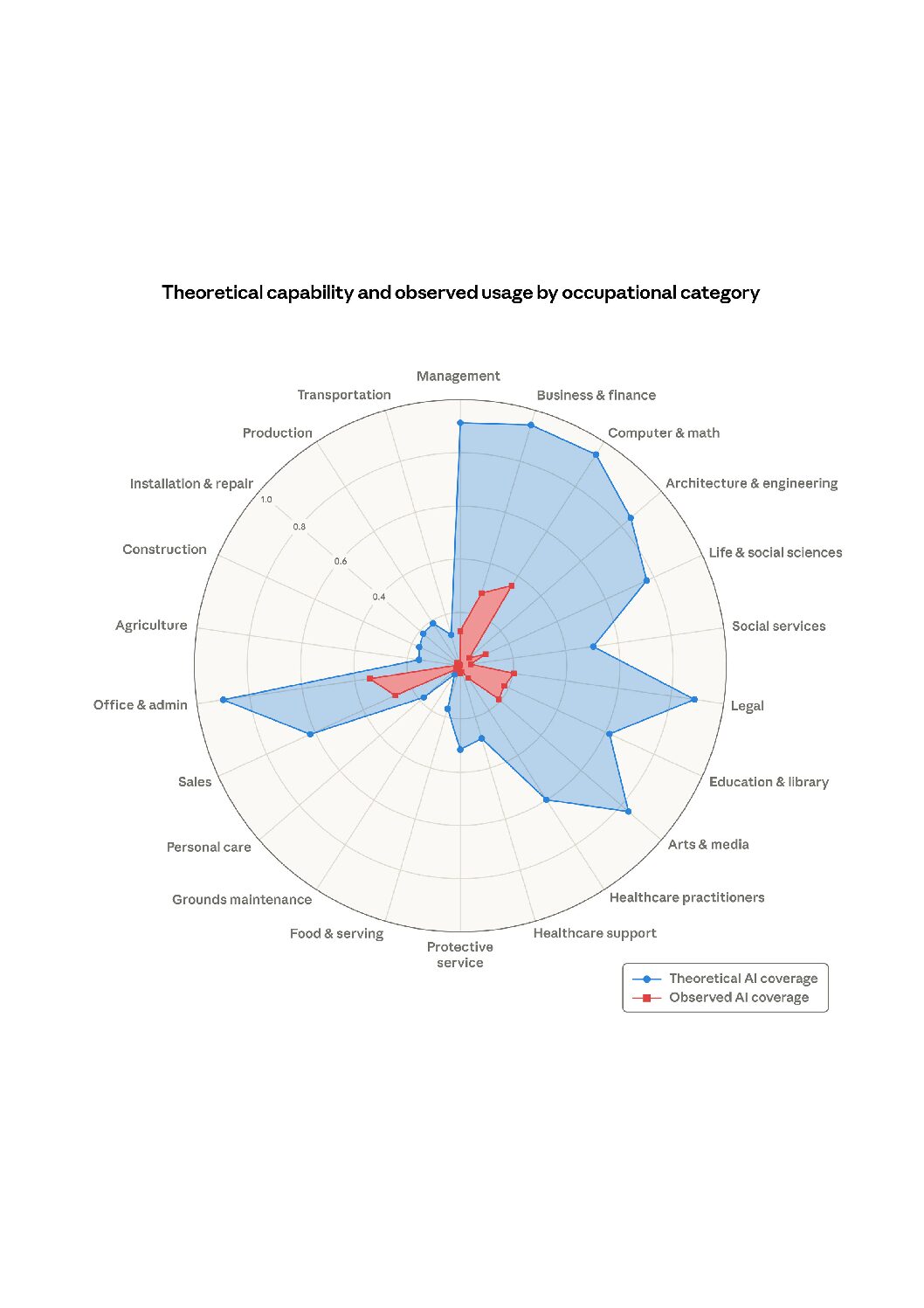
A recent Anthropic study mapped out where AI could work across different industries and occupations. Then it measured where AI is actually being used. The gap is massive — especially in agriculture and drone operations. Theoretically capable. Practically absent. That’s changing, and it’s changing fast.
We got ahead because we were curious enough to start experimenting when most people were still skeptical. Now we’re seeing the results in our training, our tools, and how our clients operate. Here’s what we’ve learned so far.
Where Theory Meets Reality
The Anthropic research shows a consistent pattern across occupations: there’s a gap of 50 to 65 percentage points between what AI could theoretically do and what’s actually being deployed in real work. Agriculture sits near the extreme end of that spectrum — high theoretical capability, near-zero observed usage.
For drone operators, this plays out in specific ways. Your SORA risk assessments, flight logs, regulatory compliance documentation, contingency planning — all of these tasks are theoretically automatable. Most operators are still doing them manually, or not doing them thoroughly enough. That’s not laziness. It’s just that the tools didn’t exist, and the industry was still catching up to the regulations themselves.
We started building tools — FlightOps Pro, our RPOC manual generator, our training skills — because we realized we were manually doing work that AI could handle better and faster. A year in, we’re seeing the pattern clearly: operators who adopt these tools move faster, document better, and make fewer compliance mistakes. That’s not because we’re geniuses. It’s because we started asking the question earlier: “What should AI be doing here?” Most of the industry is still asking: “Can AI do this?” That’s a year behind.