Ukraine Proved It. Canada Still Hasn’t Learned It.
The Russian military attributes 40% of its current casualties to drone strikes—up from near-zero five years ago. Canadian Army doctrine has been revised once since the Ukraine conflict began in 2022. Transport Canada licensed 8,247 commercial drone operators between 2021 and November 2025, yet Canadian Forces ground training curriculum contains zero mandatory modules on drone threat recognition, thermal signature discipline, or coordinated air defense at squad level. This isn’t a capability gap. This is institutional muscle memory frozen in place while the battlefield transformed.
The Data Nobody Acts On
Russian casualty figures released by the Ukrainian GUR show that as of October 2025, drone strikes account for 40% of direct-fire losses—a threshold crossed around mid-2024. Compare this to Canadian military force planning: the Department of National Defence spent $27.6 billion in fiscal 2024 on defence, yet allocated approximately $420 million (1.5%) to drone acquisition and counter-drone capabilities across all three services. The Canadian Army’s Individual and Collective Training Plan, last materially revised in 2019, contains no mandatory competency standards for drone-threat response below company level. Meanwhile, Transport Canada’s regulatory regime has matured significantly, particularly following the November 4, 2025 updates to SFOC (Special Flight Operations Certificates) and remote pilot qualification standards. The contradiction is stark: we’re certifying commercial operators for complex airspace operations while soldiers receive no formal training to operate in or defend against the tactical drone environment that Ukraine has made operational reality.
Where the Institutional Failure Actually Lives
The problem isn’t technology; it’s doctrine ownership. The Army Training Centre at Canadian Forces Base Gagetown drives curriculum change, but they operate within a doctrine cycle that historically treats new threat domains as “emerging” for 3–5 years before action. Drone warfare stopped being emerging in Ukraine by Q3 2023. The Royal Canadian Air Force maintains counter-drone expertise, but it’s siloed in air defense squadrons—not integrated into ground unit SOPs. Treasury Board and National Defence Headquarters review capability investment proposals annually, but funding cycles move slower than tactical reality. A 2024 Canadian defence industry assessment by the Conference of Defence Associations identified drone integration as a gap, but that assessment hasn’t generated a binding tasking order to training command. No one institution explicitly owns the accountability for getting this into daily platoon training. That void is the antagonist here—not any person or deliberate choice, but structural inertia that assumes tomorrow’s doctrine can be built next year.
The Strategic Competency We’re Actually Missing
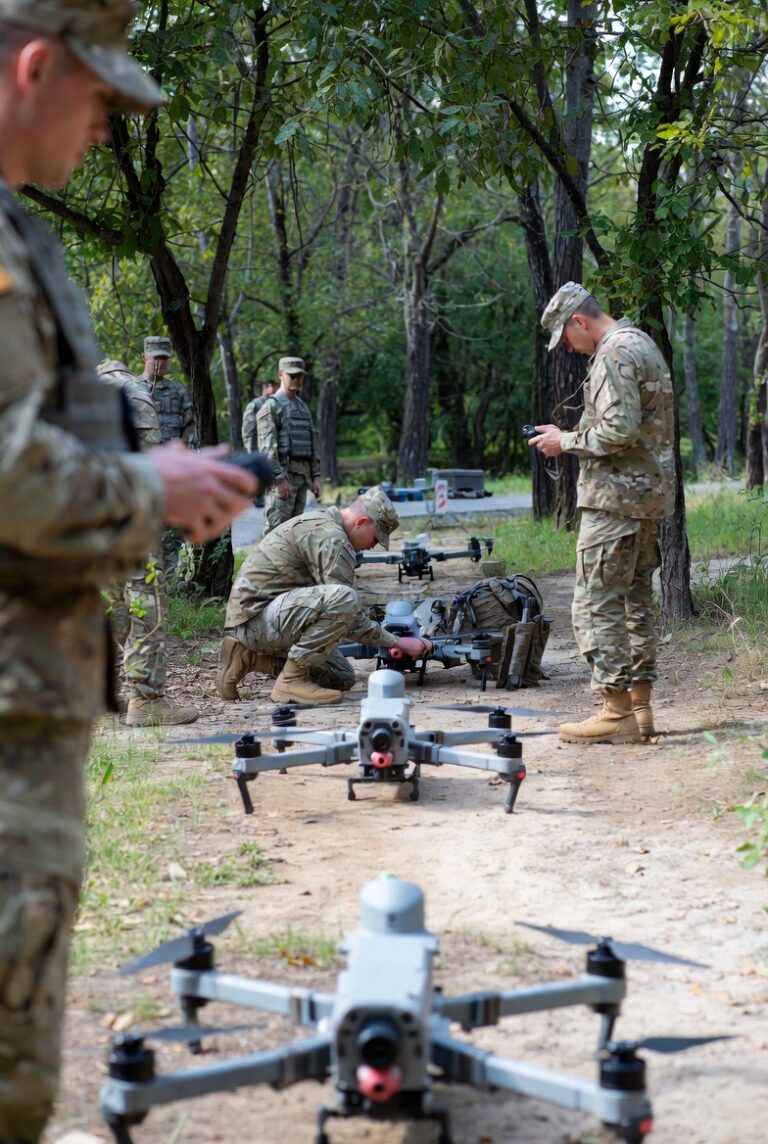
This isn’t about buying counter-drone weapons systems. It’s about embedding drone-aware behavior into every soldier’s foundational training. Ukrainian forces learned through bitter operational necessity: thermal signature discipline, acoustic camouflage, decentralized air-defense decision-making, and real-time threat reporting from distributed elements. Canadian soldiers don’t train any of this systematically. A Canadian defence contractor working with allied forces reported in 2024 that training adaptation timelines for NATO armies averaged 18–24 months after a new threat-form is operationally proven. That’s the timeline we’re on—and we’re already 18 months into it. The challenge isn’t finding money (the 2025 defence policy update commits additional funding) or buying equipment (procurement timelines exceed doctrine timelines anyway). The challenge is forcing institutional accountability: which general officer signs the memorandum that makes drone-threat training non-negotiable before your next battalion rotation, and what specific competencies does that training contain?