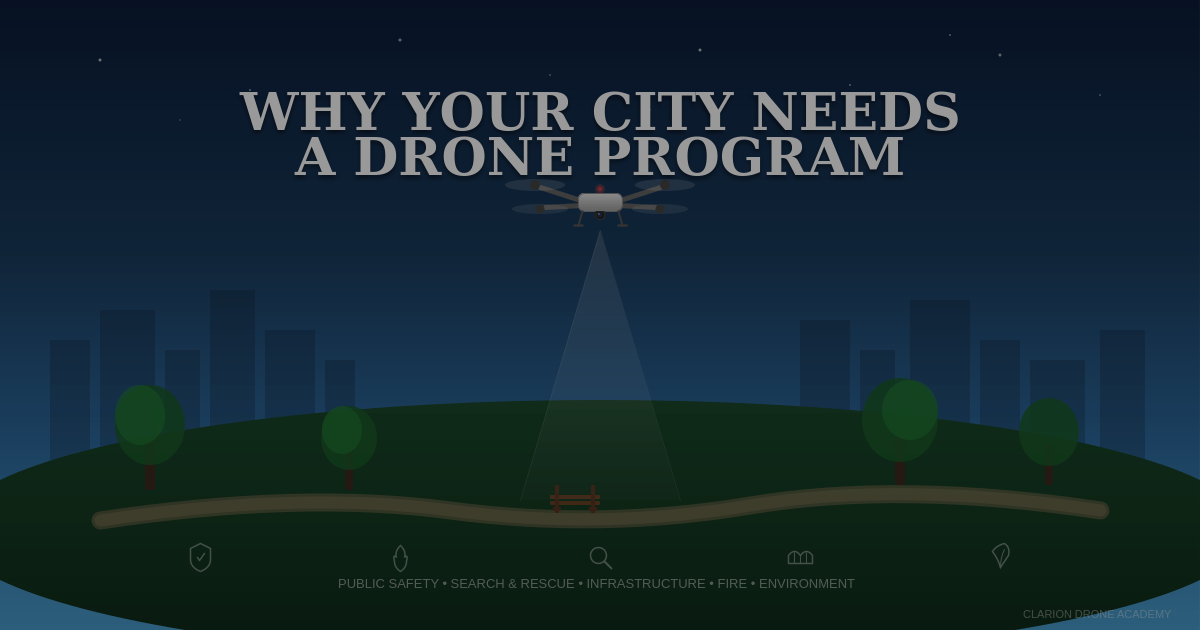
Why Your City Needs a Drone Program
From Serial Poopers to Search and Rescue —
The Case for Municipal RPAS Investment in Canada
It Started with a Park and a Problem
In February 2026, the Stoughton Police Department in Wisconsin made international headlines for deploying a drone to catch a woman who had been repeatedly defecating in a public park. After dozens of complaints and trail camera footage revealing a pattern, police launched an RPAS early one morning, recorded the offender in the act, and issued a citation for indecent conduct. The internet had a field day.
But underneath the jokes lies a point every Canadian municipality should pay attention to: the same drone that caught a serial park pooper could locate a missing child, provide overwatch for officers responding to a violent call, or document a collision scene in minutes instead of hours. That versatility is what makes municipal drone programs such a compelling investment.
Canada’s Own Growing Pains
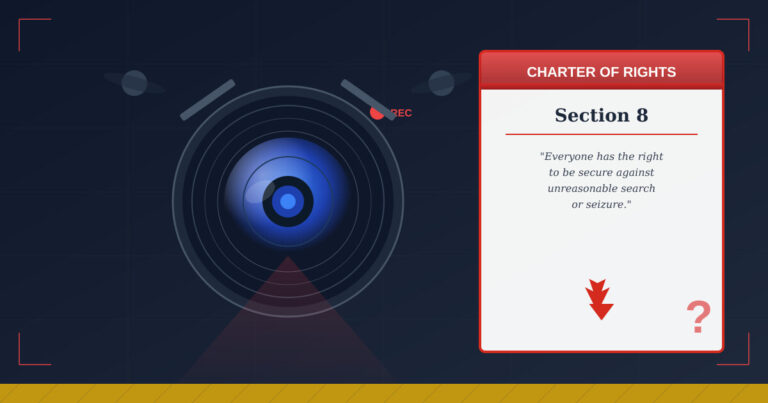
Canada isn’t immune to figuring out how drones fit into public safety. In May 2025, Kingston Police in Ontario deployed a drone to catch distracted drivers, recording motorists using their phones from above and pulling over 20 drivers in a single day. The backlash was immediate. Former Ontario Privacy Commissioner Ann Cavoukian called it “absurd.” The Canadian Constitution Foundation argued it violated Section 8 Charter protections. By early 2026, at least two tickets had been withdrawn, and Kingston confirmed they hadn’t used drones for traffic enforcement since.
The lesson isn’t that police shouldn’t use drones. It’s that they need proper training, clear policies, and legal frameworks before deploying them. Kingston repurposed a collision reconstruction drone for enforcement without seeking legal advice. The technology worked perfectly. The process around it didn’t.
Where It’s Working: The DFR Model
While Kingston stumbled, other Canadian agencies are getting it right. The Drone as First Responder (DFR) model — where drones are pre-positioned and dispatched to 911 calls before officers arrive — is gaining serious traction. The RCMP tested DFR in three Alberta communities: Lac La Biche, Red Deer, and Stoney Nakoda First Nation. Drones were dispatched to calls involving assaults, fires, and an explosion, delivering improved situational awareness and a cost-effective alternative to helicopter deployment. Durham Regional Police in Ontario is now researching a provincial DFR model integrating police, fire, and EMS on a shared platform, with drones autonomously deployed within 60 seconds of a 911 call.
The RCMP has also established a dedicated RPAS corridor along the Canada–U.S. border in Alberta, Saskatchewan, and Manitoba for intelligence-driven patrols targeting illegal crossings. Nationally, Canada’s Department of National Defence ran urban counter-drone detection trials over downtown Ottawa near Parliament Hill in late 2025, bringing together CAF, RCMP, Ottawa Police, and Transport Canada.
Internationally, the numbers are staggering. Chula Vista PD in California has logged over 24,000 drone flights since 2018, with over 1,000 deployments eliminating the need to send an officer at all. The LAPD launched DFR in mid-2025 and was averaging 23 drone deployments per day within months.
Beyond Policing: The Full Spectrum
Municipal drone programs aren’t limited to law enforcement. The same platforms and training support a much broader mandate: thermal-equipped search and rescue in northern terrain, aerial fire scene assessment, bridge and infrastructure inspection without scaffolding, collision reconstruction in minutes instead of hours, and environmental monitoring of illegal dumping or flood damage. One well-trained team with proper equipment can handle all of it.
Canada’s November 2025 regulatory changes — including the new Level 1 Complex Operations certificate for BVLOS and the RPAS Operator Certificate (RPOC) requirement — are designed to enable exactly these kinds of programs. But they also raise the bar. A municipal drone program requires certified pilots, a documented Safety Management System, privacy and data retention policies, and ongoing proficiency training. Without that foundation, you get Kingston. With it, you get the RCMP’s DFR program.
The Bottom Line
Yes, a Wisconsin police department used a drone to catch someone pooping in a park. It’s funny. It’s also a reminder that drones are now the Swiss Army knife of municipal operations — handling everything from the ridiculous to the life-critical, depending on what the day demands. For Canadian cities, the question isn’t whether drones are useful. The RCMP and agencies across the country have answered that. The question is whether your municipality will invest in doing it right, or wait until the next headline forces the conversation.
At Clarion Drone Academy, we’ve been training government, military, and law enforcement clients in advanced drone operations since 2014 across Canada and internationally. If your municipality is ready to move from headlines to flight plans, we can help you build a program that works — for every mission, from the serious to the spectacularly weird.
Contact us at clariondrones.com to discuss your municipality’s drone program needs.