China’s 16-Ton Drone Mothership: Arctic Security Implications for Canada
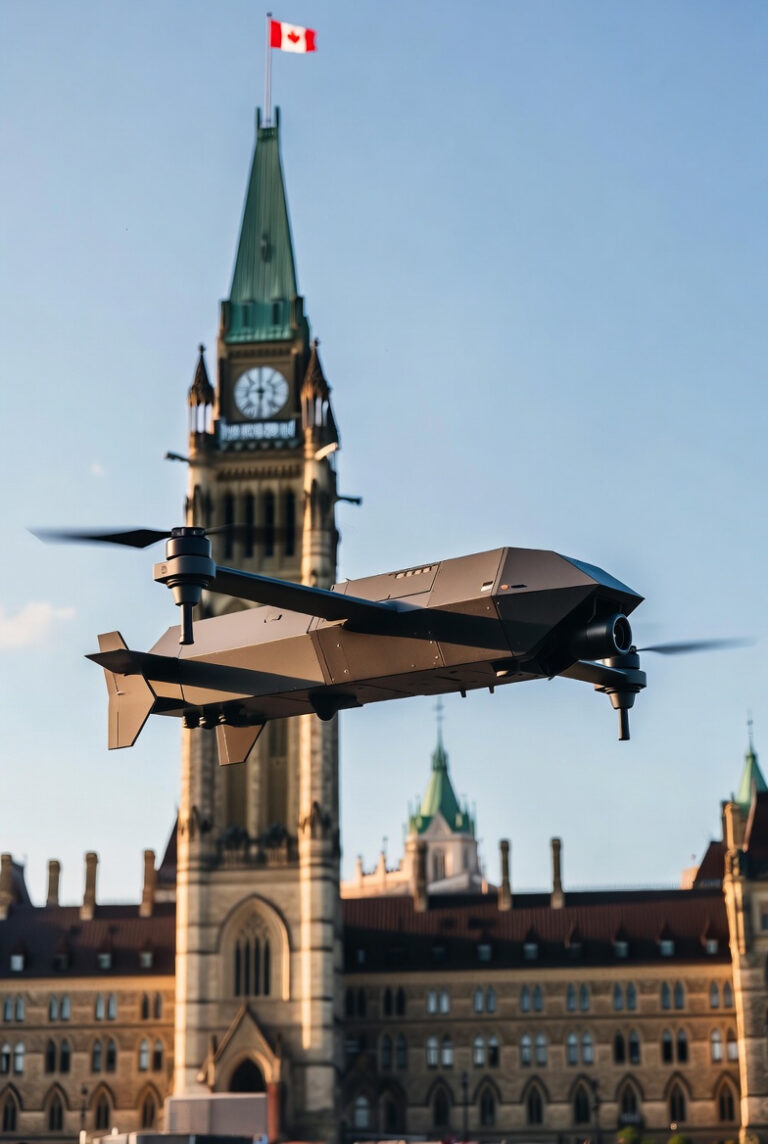
On December 11, 2025, China successfully flew the Jetank (Jiutian) unmanned aerial vehicle, a 16-ton drone mothership capable of deploying swarms of smaller drones mid-flight. With a 7,000-kilometer range and capacity to carry 100 loitering munitions, this breakthrough has profound implications for Canadian Arctic security as the nation invests $38.6 billion over 20 years in NORAD modernization.
The Jetank Threat Profile
The Aviation Industry Corporation of China (AVIC) has developed a platform that fundamentally changes Arctic air defense. At 16.35 meters in length with a 25-meter wingspan, the Jetank delivers 6,000 kilograms of payload over distances reaching deep into Canadian Arctic territory. Its modular system enables mission reconfiguration in two hours, with eight underwing hardpoints carrying guided bombs, missiles, and anti-ship weapons.
Most critically, the “isomerism-hive” module houses hundreds of autonomous drones deployable mid-flight. Combined with 12-hour endurance, the Jetank could launch from Russia’s Far East and reach Canadian airspace without forward deployment or refueling. Chinese state television showcased swarm deployment capabilities designed to overwhelm traditional air defenses through distributed autonomous operations.
Canadian Arctic Vulnerability
Geographic Exposure
Canada’s Arctic represents 40% of national landmass but contains less than 0.3% of its population—approximately 115,000 residents. The Canadian Armed Forces maintain limited permanent infrastructure, with the $218 million Northern Operational Support Hubs only beginning to establish year-round presence. Climate change is transforming the Northwest Passage into a navigable corridor 4-6 months annually, simultaneously opening new security threat vectors.
Russia’s Arctic militarization compounds vulnerabilities. As Jody Thomas, the Prime Minister’s National Security Adviser, testified to Parliament: “Russia is rebuilding its Arctic military infrastructure to Soviet-era capability despite economic woes from their invasion of Ukraine.” In 2025, NORAD scrambled aircraft 12 times to intercept Russian bombers—representing only detected incursions.
Detection Gaps
Canada’s North Warning System, a Cold War-era radar network, was designed for Soviet bombers, not hypersonic missiles or drone swarms. Brigadier General Houston Cantwell (ret.) noted Russian bombers could “launch cruise missiles and return to base without detection by the existing radar system.” The Jetank exploits this gap—hundreds of small drones dispersing across Arctic airspace would overwhelm radar coverage and create impossible targeting challenges.
The Arctic Over-the-Horizon Radar (A-OTHR) project aims to address shortcomings with initial operational capability projected for late 2029. However, this $6.69 billion program represents a race against evolving threats. The Jetank’s December 2025 maiden flight demonstrates adversaries are actively fielding capabilities designed to exploit current detection voids.
NORAD Modernization and Swarm Economics
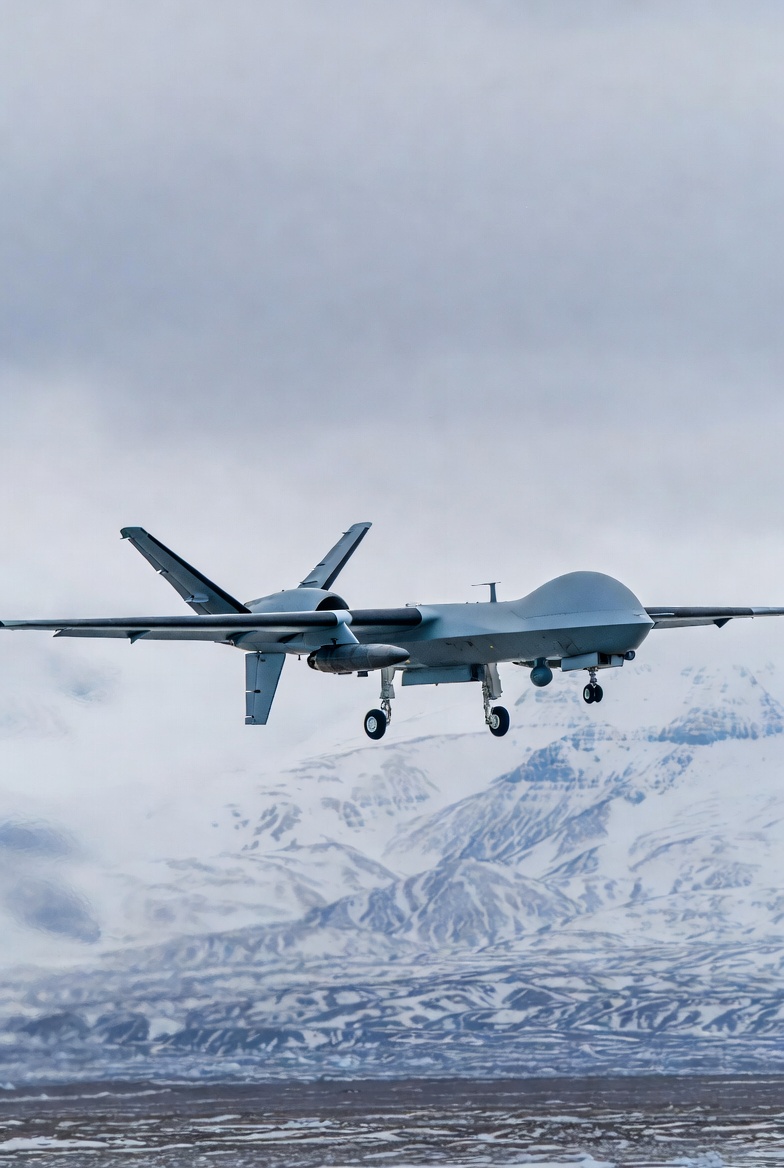
Canada’s June 2022 NORAD modernization represents the most significant continental defense investment in four decades: $4.13 billion for communications networks, $1.4 billion for maritime sensors, $307 million for airborne early-warning aircraft, and $2.5 billion for 11 MQ-9B SkyGuardian drones (deployment by 2028). However, these investments predate autonomous swarm warfare becoming operational reality.
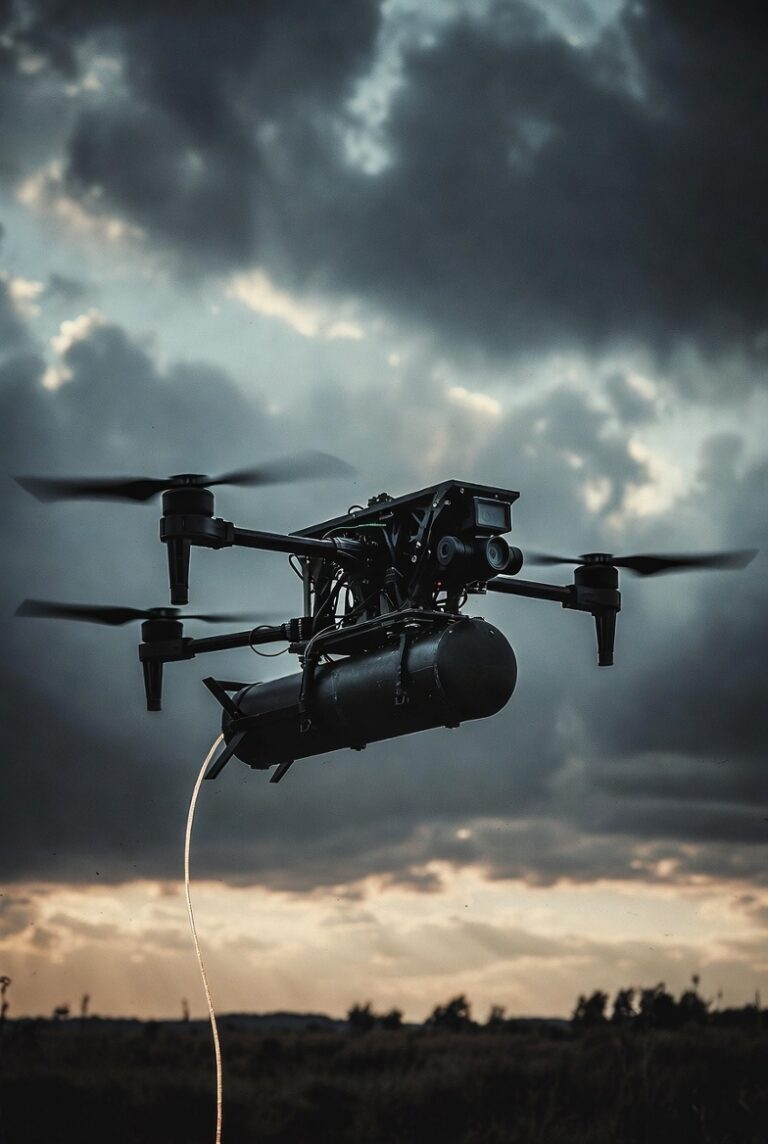
The fundamental challenge lies in asymmetric economics. Each CF-18 Hornet costs $31 million; AIM-120 missiles cost $1.4 million each. Jetank-deployed drones cost $2,000-$20,000. If one Jetank releases 100 drones over Arctic airspace, traditional defense economics collapse—million-dollar missiles cannot sustainably chase thousand-dollar threats. Canada’s 76 operational CF-18s cannot generate sufficient sorties to engage hundreds of simultaneous targets across thousands of square kilometers.
Regulatory Context and Vulnerability
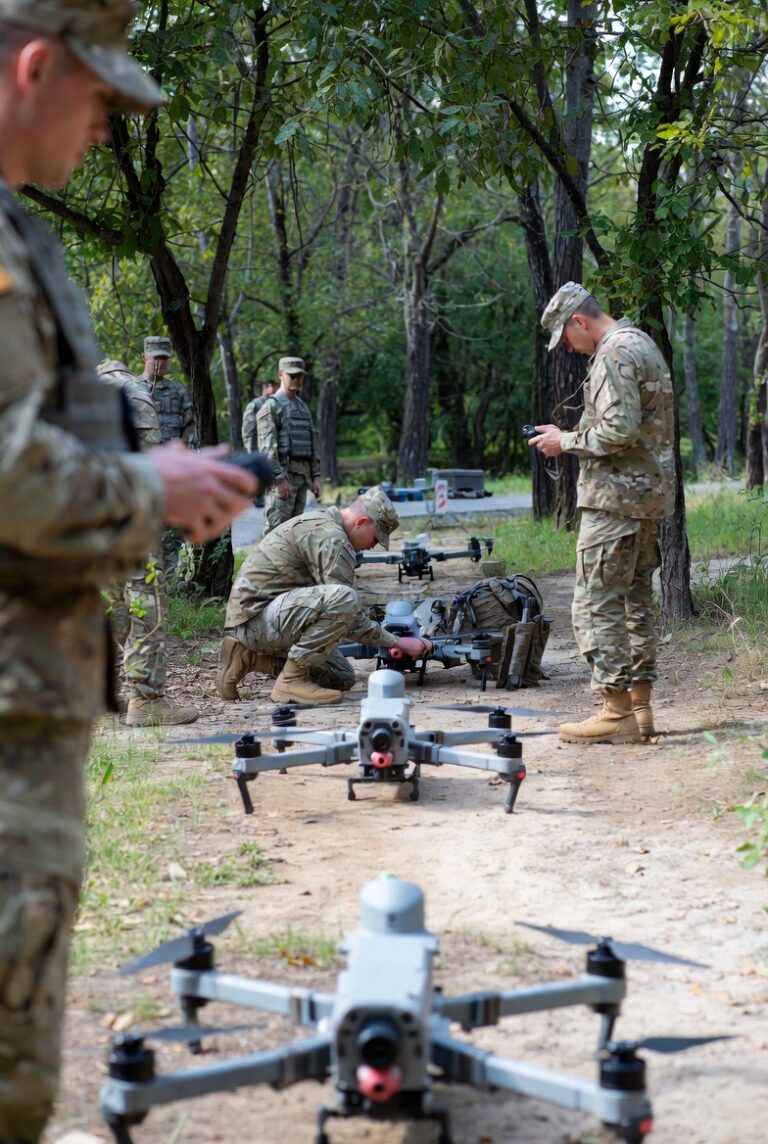
Transport Canada’s November 4, 2025 regulatory changes governing Beyond Visual Line of Sight (BVLOS) operations reveal Canada’s understanding of autonomous systems. The Level 1 Complex Operations certification eliminates Special Flight Operations Certificates for lower-risk BVLOS, requiring 20 hours ground school—positioning Canada as a regulatory leader alongside the European Union.
However, civilian regulations highlight military vulnerability: hostile drone motherships remaining in international airspace could release smaller systems that penetrate Canadian territory below radar detection thresholds. Canada has detailed procedures for peaceful commercial drones but lacks proven countermeasures against hundreds of hostile autonomous systems deployed simultaneously across Arctic airspace.
Strategic Recommendations
Canada must fundamentally rethink Arctic air defense. Traditional platform-centric defense is no longer economically viable against distributed autonomous swarms:
- Accelerate directed-energy weapons for Arctic deployment. High-energy lasers and microwave systems offer economically sustainable defenses with per-shot costs in dollars, not millions.
- Develop indigenous counter-swarm drone capabilities. Autonomous interceptor swarms engaging hostile drones at similar cost points represent the only scalable response.
- Prioritize electronic warfare for Arctic operations. Advanced jamming, GPS spoofing, and cyber-warfare could disrupt swarm cohesion without kinetic engagement of every drone.
- Expand Arctic Over-the-Horizon Radar beyond current scope. The 2029 initial operational capability must be accelerated, and the four-site plan reassessed for adequacy against distributed threats.
- Strengthen Inuit-Crown Partnership Committee collaboration. Indigenous knowledge and Community Safety Officers provide early warning of unusual aerial activity automated systems might miss.
- Accelerate F-35A deployment with counter-swarm capabilities. Next-generation fighters must coordinate with friendly autonomous systems while disrupting hostile swarms through advanced sensors.
Conclusion
The Jetank maiden flight signals a fundamental shift in how adversaries project power across contested airspace. For Canada—with the world’s longest coastline, 40% of territory in the Arctic, and defense spending at 1.3% of GDP (below NATO’s 2% target)—this demands urgent strategic reassessment.
Transport Canada’s November 4, 2025 BVLOS regulations demonstrate authorities understand autonomous flight is routine, yet military preparedness lags dangerously. Canada cannot rely on billion-dollar programs conceived for yesterday’s threats to defend against autonomous swarm warfare. The adaptation window is measured in years—the Jetank flies today, and adversary capabilities accelerate from this baseline.
Arctic sovereignty requires credible ability to detect and neutralize threats across Earth’s most challenging environment. As climate change opens northern passages, Arctic strategic importance intensifies. Canada must move decisively to ensure that when drone swarms test Arctic airspace, the response demonstrates both technological capability and unwavering commitment to sovereignty. The $38.6 billion NORAD investment provides foundation, but the Jetank challenge demands asymmetric thinking and recognition that Arctic defense will be autonomous, distributed, and fundamentally different from past century’s air battles.