If the Pentagon Can’t Coordinate Its Drone Operations, What Makes You Think Your Organization Has It Figured Out?
A $30 Million Coordination Failure
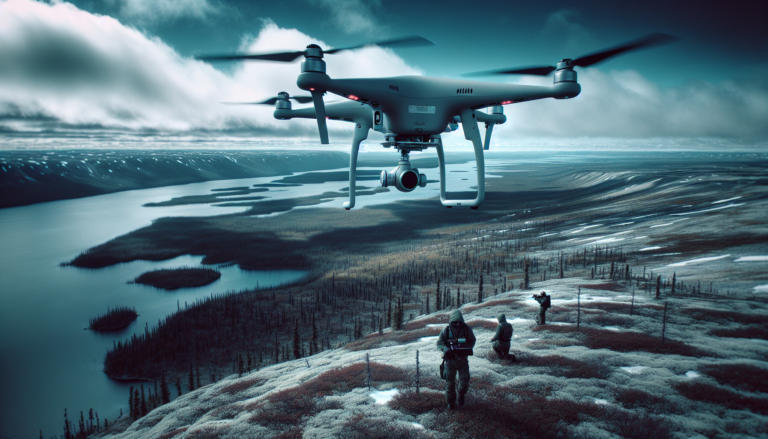
On February 26, 2026, the United States military destroyed a Customs and Border Protection surveillance drone over Fort Hancock, Texas. Not an enemy drone. Not a cartel drone. Their own. A high-energy laser system locked onto what operators identified as an unidentified aircraft and fired. The drone was destroyed instantly.
The cause was not a technology failure. CBP never told the Pentagon the drone was flying. The Pentagon never checked with CBP. Neither coordinated with the FAA. Three federal agencies, same airspace, zero communication. This was the second major coordination failure in the same area in three weeks. Cost to taxpayers: an estimated $30 million.
If you run a drone program inside any organization — construction, utilities, mining, law enforcement, government — that story should get your attention. Not because you operate military lasers. Because the exact same coordination gap exists in organizations across Canada right now. The difference is scale. The consequences are just as real.
This Is Not Just an American Problem
In January 2025, a Quebec CL-415 water bomber fighting the Palisades Fire in Los Angeles collided with a civilian drone in restricted airspace. The impact punched a fist-sized hole in the wing. The pilot didn’t know the aircraft had been hit until he landed. A Canadian asset, deployed under a 30-year mutual aid agreement, was grounded during a wildfire emergency because one person flew a drone without understanding the operational environment. A 56-year-old man has since pleaded guilty.
Here in Canada, Transport Canada has partnered with at least 13 police forces to enforce drone regulations. As of April 2025, corporations face fines of up to $25,000 per violation and individuals up to $15,000 for serious breaches. But enforcement only catches what people notice. The real risk is the thousands of organizations operating drones every day with no documentation, no risk assessments, no coordination procedures, and no idea they are exposed.
The Gap Nobody Talks About
Most organizations running drone programs believe they are compliant. They have a certified pilot. They have a drone. They are getting the job done. Here is what “fine” usually looks like:
No written SOPs. If your pilot is unavailable tomorrow, can someone else pick up the operation? Or does everything live in one person’s head?
No flight documentation. Transport Canada requires records of every flight — site assessments, weather evaluations, risk analysis. If an incident happens and they ask for your records, what do you hand them?
No coordination protocols. This is exactly what destroyed the CBP drone. If your organization flies near airports, construction sites, or anywhere other agencies operate, who handles coordination? Is there a documented process?
No incident response plan. If your drone hits a vehicle, injures a bystander, or crashes into a structure — what is the protocol? Who gets called? Who contacts Transport Canada?
No insurance alignment. Standard commercial general liability policies typically contain aviation exclusions that eliminate coverage for drone operations. A drone clipping a utility line could result in hundreds of thousands of dollars in claims with zero coverage under your existing policy.
What the Pentagon Story Really Teaches Us
The Texas incident was not caused by incompetent people. CBP operates sophisticated surveillance drones. The military operates advanced counter-drone systems. Both agencies employ trained professionals. The failure was not skill. It was systems. No coordination protocol. No shared operational picture. No documentation of who was flying what, where, and when.
That is the same gap in organizations across Canada. The pilot knows what they are doing. The equipment works. But the organizational systems — the SOPs, the documentation, the coordination, the risk management, the insurance alignment — either don’t exist or haven’t been updated since the drone was purchased.
The Question You Should Be Asking
If Transport Canada called your organization today — not for an audit, but because there was an incident — could you produce written SOPs, complete flight records, current pilot and maintenance documentation, an incident response plan your team has actually reviewed, and proof your insurance covers drone operations?
If the answer to any of those is no, your organization has the same gap that cost the Pentagon $30 million. The only difference is that nobody has noticed yet.