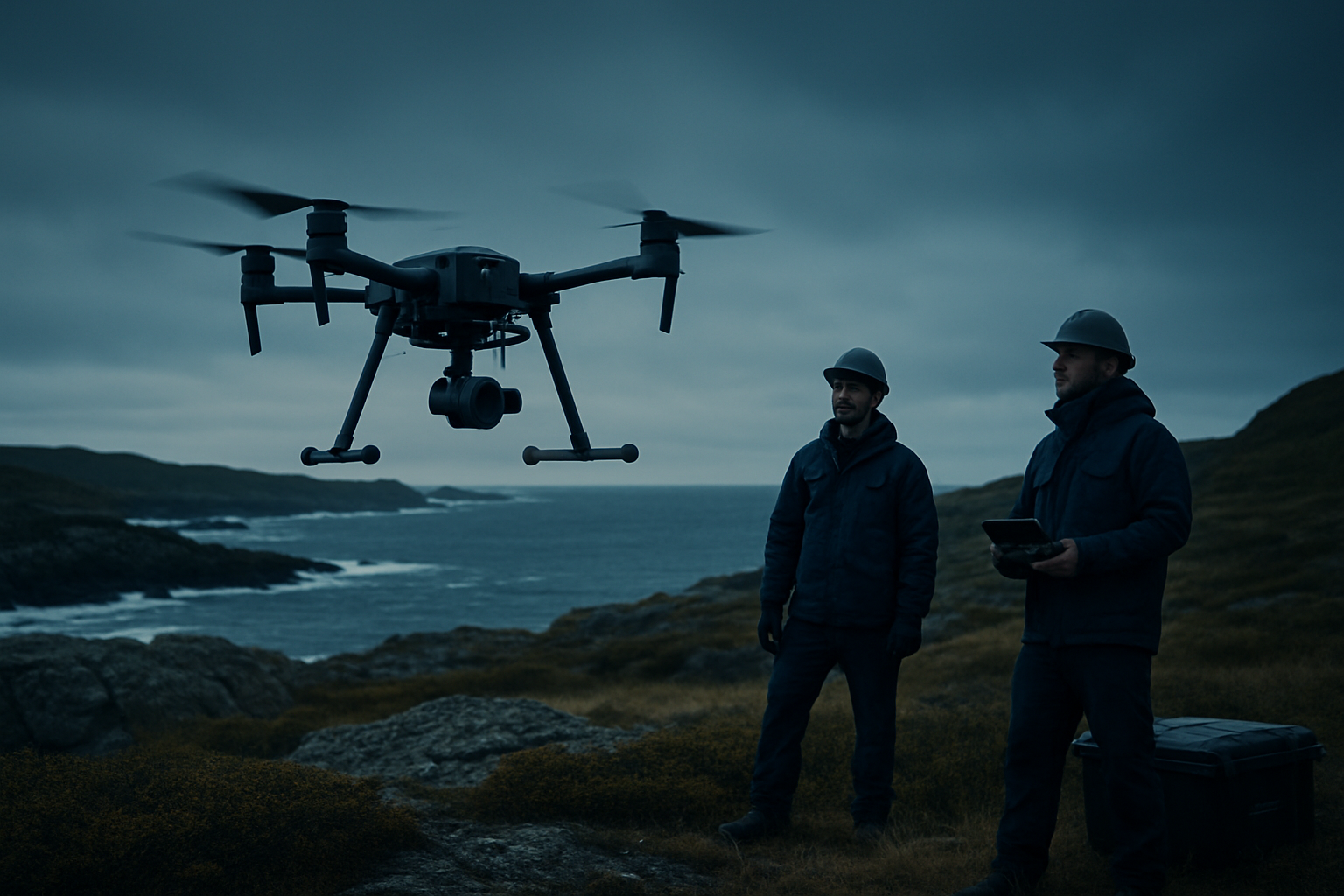
$29.6 Million for a Drone Hub in Mirabel. Not One Line for Operator Training.
Canada’s first-ever Defence Industrial Strategy, released in February 2026, named uncrewed systems and training and simulation as distinct sovereign capabilities — two separate lines, equal weight. The $29.6 million commitment to a drone hub in Mirabel funds one of them. The other does not appear in the announcement. This is not a budget rounding error. It is a pattern, and the operators who will eventually be handed these platforms will absorb the cost of it.
The Strategy Said Both. The Cheques Say Otherwise.
Canada’s Defence Industrial Strategy is explicit: sovereign capability in uncrewed systems requires not just the platforms but the human infrastructure to operate them. Training and simulation appear in the strategy document as a named priority — not a footnote, not an assumed downstream activity. Yet the Mirabel announcement, like the major drone infrastructure investments that preceded it, funds the physical and industrial layer and leaves the operator training layer to sort itself out later.
This is the institutional antagonist: not a single department or minister, but a procurement culture that treats operator readiness as someone else’s problem. The assumption embedded in every platform-first announcement is that qualified operators will materialize when needed. In Clarion’s experience working with government clients, they do not. They arrive under-prepared, trained to a standard that predates the regulatory environment they are now required to operate in, or not trained at all because no training budget was ever attached to the capability acquisition.
The Regulatory Gap Is Already Visible
Transport Canada’s November 4, 2025 BVLOS reform created a structured pathway: operators conducting lower-risk BVLOS now require a Level 1 Complex pilot certificate individually and an RPOC organizationally. As of August 13, 2026, Transport Canada has issued 709 Level 1 Complex pilot certificates nationally and 615 active RPOCs. Those numbers describe a country in which organizations have legal authorization to conduct BVLOS operations, but the pool of individually certified pilots to staff those missions is measured in the hundreds — spread across commercial, government, and military users alike.
The Level 1 Complex certificate is not a rubber stamp. Earning it means already holding an Advanced certificate, completing 20 hours of ground school, passing Transport Canada’s dedicated Level 1 Complex exam, and then completing an in-person flight review with a qualified Flight Reviewer. As of August 13, 2026, there are 1,385 Flight Reviewers in Canada — a number that sounds adequate until you map it against the geographic footprint of federal drone operations and the scheduling reality of standing up new BVLOS programs. Infrastructure scales faster than certification pipelines, especially when no one is funding the pipeline.
What a Credible Investment Actually Requires
A drone hub in Mirabel that develops and tests platforms for Canadian defence is a legitimate industrial policy goal. The problem is not that the hub exists — it is that the announcement treats the hub as the capability rather than as one input to it. A platform sitting in a hangar because the unit that received it has no Level 1 Complex-certified operators and no RPOC is not a sovereign capability. It is an expensive liability.
Credible investment in uncrewed systems sovereign capability requires a training line in every platform acquisition: budget allocated, provider identified, regulatory pathway mapped, and operator certification timelines synchronized with delivery schedules. The November 4, 2025 reforms created exactly the kind of defined, scalable certification structure that makes this planning possible. The RPOC framework gives organizations a clear authorization target. The Level 1 Complex pathway gives individuals a defined credential to achieve. What is missing is the institutional will to fund both simultaneously rather than sequencing platform first and hoping training follows.
The Strategic Challenge
The next major Canadian defence drone announcement will either include a training and certification budget line or it will not. If it does not, someone should ask, on the record and by name, which assumption in the Defence Industrial Strategy was wrong — that platforms matter, or that the people who operate them do.
Continue the Conversation
The Clarion Professional Network has an active thread on synchronizing RPOC applications with Level 1 Complex certification timelines — exactly the planning gap this article describes. If you are inside a government or military procurement cycle and trying to map operator readiness against platform delivery, that conversation is already happening there.