Britain Sent 350 Soldiers to Alberta to Train Under Drone Attack. Canada Has No Civilian Equivalent.
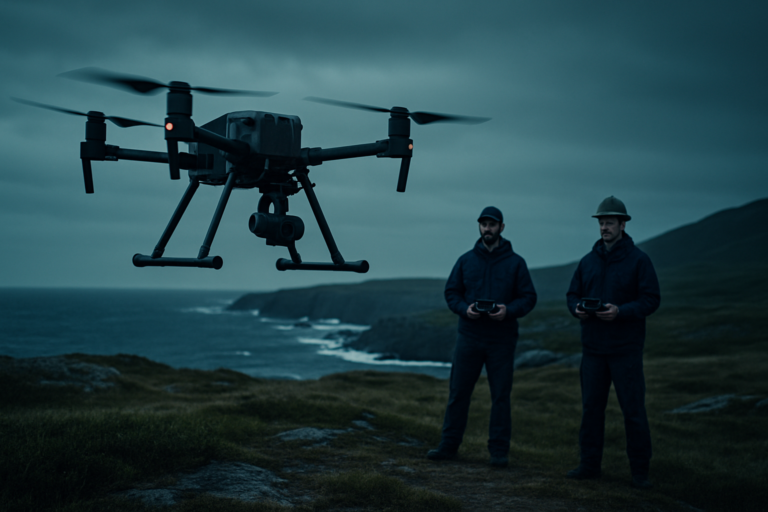
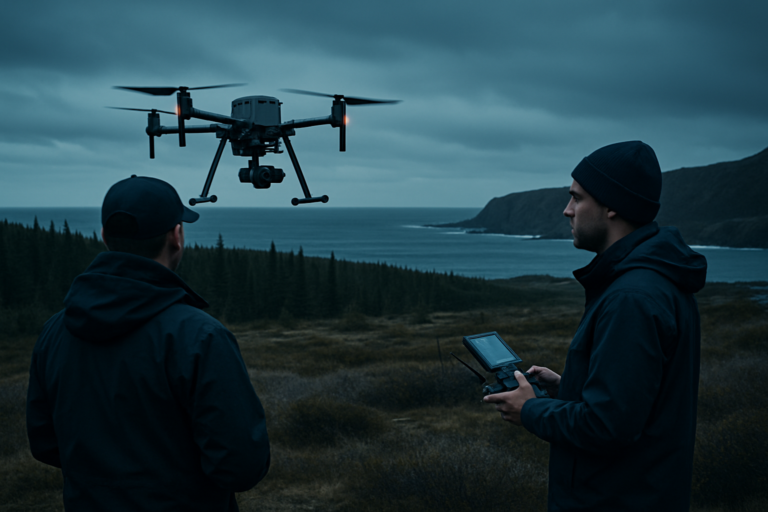
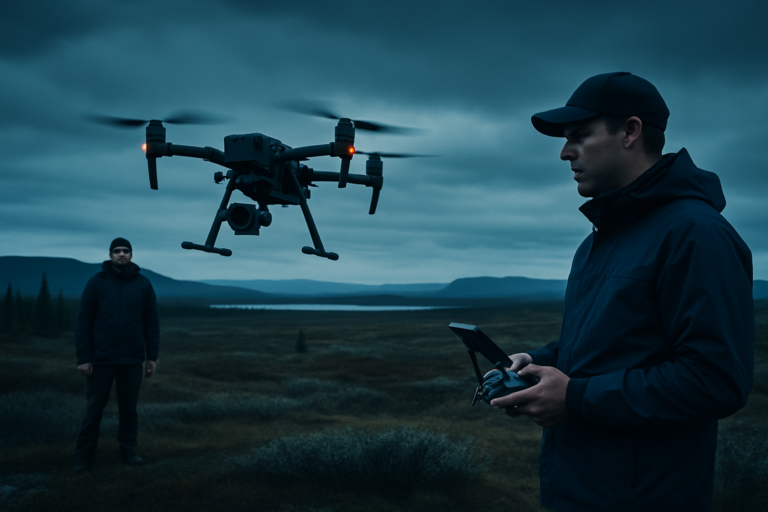
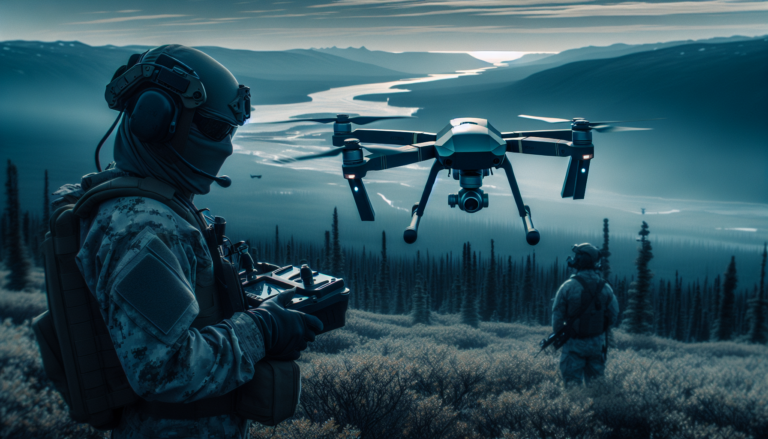
This summer, roughly 350 British Army soldiers deployed to Alberta for Exercise Rhino Bizz — a live training rotation at British Army Training Unit Suffield built around drones, electronic warfare, and force-on-force scenarios on Canadian terrain. Canadian troops trained alongside them. But the civilian side of Canada’s own security establishment — government, law enforcement, and critical infrastructure operators who face the same threat environment at home — has no domestic equivalent. That asymmetry is not an accident. It is the product of a decade of deferred investment in adversarial drone training doctrine, and it is now a security liability.
What Britain Built Here That We Haven’t Built for Ourselves
Exercise Rhino Bizz used Canadian airspace and Canadian geography to prepare British forces for a threat environment NATO militaries now treat as baseline: drones used to surveil, harass, and strike personnel and equipment. The rotation put soldiers into contested, drone-saturated airspace — operating under constant surveillance and electronic-warfare pressure, integrating drones into the fight, and rehearsing how a unit reacts when hostile aircraft are overhead. That is precisely the training gap facing Canadian operators assigned to protect major events, border corridors, pipeline infrastructure, and federal facilities. The British Army identified the training requirement, secured a range, and deployed roughly 350 personnel to satisfy it. Canada’s equivalent civilian operator community — RCMP tactical units, federal protective services, provincial critical infrastructure teams — has no comparable standardized program. The training that exists is fragmented, vendor-led, and largely scenario-free. Operators learn equipment. They do not consistently practice adversarial response under realistic conditions. Britain came to Alberta because the terrain and the regulatory freedom were there. The doctrine was theirs. That imbalance should concern every Canadian security planner.
The Regulatory Foundation Exists. The Training Architecture Doesn’t.
Transport Canada’s November 4, 2025 BVLOS reform created real infrastructure. The Level 1 Complex certificate establishes a baseline for lower-risk BVLOS operations. The RPOC requirement means organizations operating commercially in BVLOS environments must hold organizational authorization. As of August 13, 2026, Transport Canada has issued 709 Level 1 Complex pilot certificates and 615 active RPOCs — a thin but growing foundation for legitimate BVLOS operations across the country. What the regulatory framework does not address is adversarial competency. The Level 1 Complex pathway — the Advanced Operations exam, a minimum of 20 hours of accredited ground school, a separate Level 1 Complex exam, and an in-person flight review — validates that a pilot understands airspace integration, risk mitigation, and safe BVLOS conduct. It does not validate that a security team can detect, classify, and respond to an unauthorized aircraft operating with hostile intent in a time-compressed environment. Those are different problems. Regulation solved the first one. Nobody in Canada has systematically solved the second. An RPOC and a Level 1 Complex certificate are necessary conditions for legal BVLOS operations. They are not sufficient conditions for security operations in contested airspace.
The Institutional Failure Is Doctrinal, Not Technological
Canada is not short on drone hardware, detection sensors, or credentialed pilots. In Clarion’s experience training government and military clients, the deficit is almost never equipment. It is integrated doctrine — the repeatable, tested procedures that tell a team what to do in the first ninety seconds after an unauthorized drone enters a secured area. Britain’s Rhino Bizz rotation reflects a force that has written that doctrine and is now stress-testing it at unit level. Canada’s civilian security community is still debating whether the doctrine needs to be written at all. The institutional antagonist here is not any single agency. It is the assumption — still widespread across federal and provincial security organizations — that drone threat response is a technology procurement problem rather than a training and doctrine problem. That assumption produces teams that own detection equipment they have never operated under pressure, and operators who have logged BVLOS hours in benign airspace but have never practiced a coordinated response to a drone incursion. The equipment will not close that gap. Realistic, scenario-based, adversarial training will.
What the Next Major Event Exposes
Canada hosts large-scale public events, manages thousands of kilometres of critical infrastructure, and operates border environments where drone incursions are already documented. The operators assigned to those environments are being asked to perform a security function that has no standardized training pipeline behind it. The Level 1 Complex framework gives TC a mechanism to identify credentialed BVLOS operators. The RPOC framework gives TC a mechanism to authorize organizations. Neither framework tells those operators what to do when an adversarial aircraft enters the perimeter during a live operation. Britain answered that question before it deployed to Rhino Bizz. Canadian security planners need to answer it before the next major domestic event forces the question in real time. A visiting ally should not have to bring the most realistic adversarial drone training Canadian soil has seen — while the civilian operators who guard our own events and infrastructure still train in a vacuum. That is not a capability gap. That is a choice — and it can be reversed.
Continue the Conversation
The Clarion Professional Network has an active thread on adversarial airspace training gaps — specifically what scenario-based BVLOS training looks like for government and LE operators who need more than a flight review. If you’re building or sourcing that training for your organization, that is the right place to compare notes.