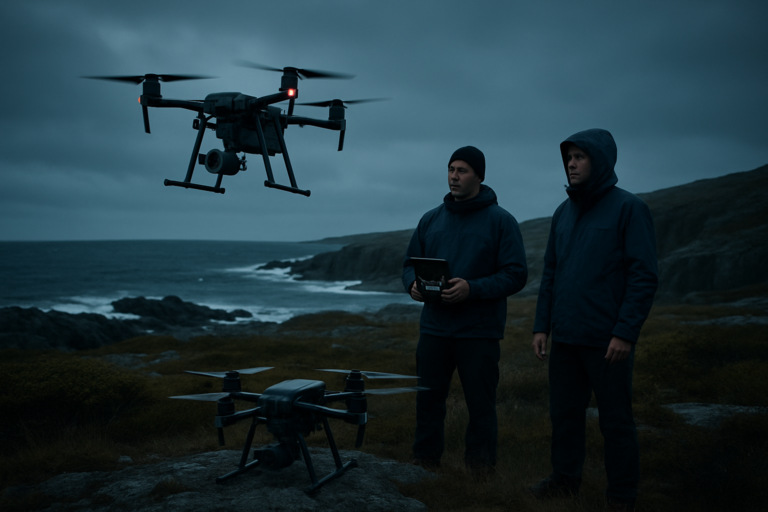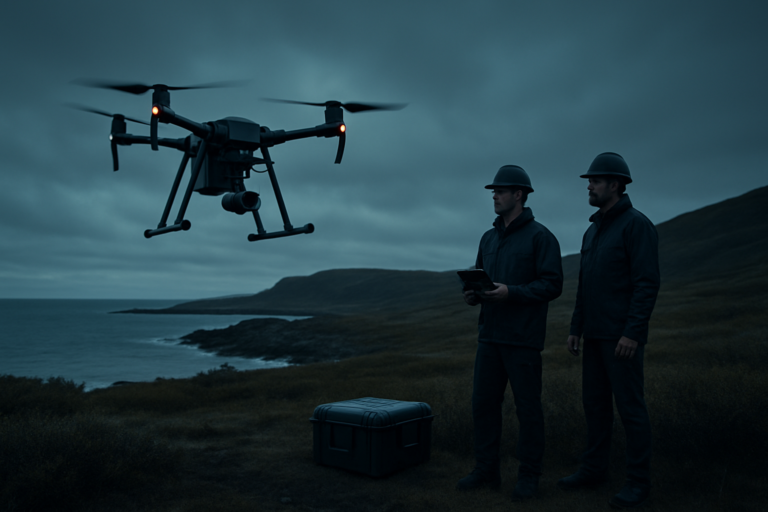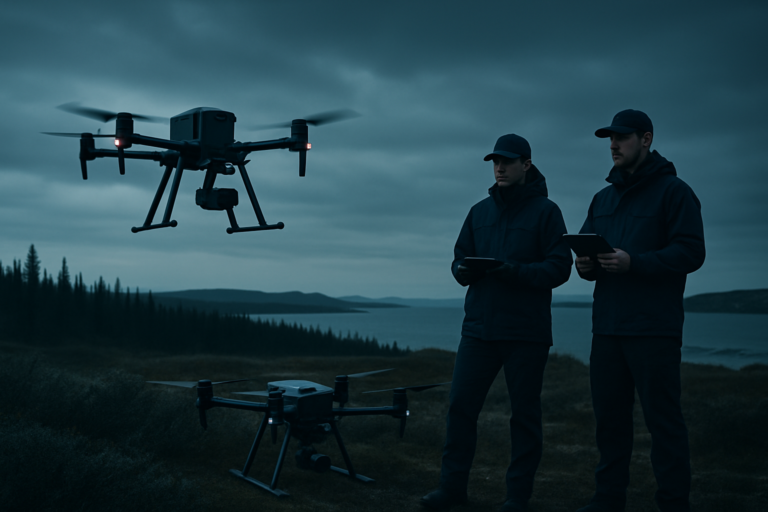

We Flew BVLOS in Latin America Before Canada Had a Framework. Here Is What That Taught Us About Training.
Canada’s formalized BVLOS framework — updated under Transport Canada’s November 4, 2025 regulatory changes — arrived after some Canadian operators had already spent years conducting equivalent missions abroad. What those operators brought home was not a competitive credential. It was something the updated CARs Part IX language cannot supply: the specific, non-transferable knowledge of what happens when an operation plan meets reality and the two do not agree.
The Classroom Did Not Build the Framework. The Field Did.
Before Transport Canada formalized BVLOS operations under the Remotely Piloted Aircraft Operator Certificate pathway, operators seeking commercial BVLOS experience had limited domestic options. Some pursued work under foreign civil aviation authority approvals in jurisdictions where operational frameworks existed earlier. Flying in varied Latin American terrain — mountain corridors, dense canopy, inconsistent cellular infrastructure — produced lessons that regulatory documents do not contain. Comms degradation behaves differently over forested ridgelines than it does in controlled airspace simulations. Visual Observers lose situational awareness in ways that no tabletop exercise replicates. Emergency response procedures that read cleanly in an operations manual compress into three seconds of actual decision time. Canadian drone schools teaching BVLOS from TC advisory circulars and CARs Part IX documents are teaching necessary content. They are not teaching this. The distinction matters because Transport Canada’s RPOC framework — which authorizes commercial organizations to conduct BVLOS operations — assumes the operator behind that authorization has operational judgment, not just regulatory literacy. Those are built in different places.
What Transport Canada’s November 2025 Changes Actually Demand
Transport Canada’s November 4, 2025 regulatory amendments updated the BVLOS operational framework, refining RPOC requirements and clarifying the conditions under which organizations can conduct beyond visual line of sight operations in Canadian airspace. The changes bring important structural clarity. They also raise the operational bar. An RPOC is an organizational authorization. It requires demonstrated safety management system capacity, documented operational procedures, and evidence that the organization can manage BVLOS risk at scale. What it does not require — and what no regulatory document can require — is that the individuals executing those operations have been tested by the conditions that deviate from the plan. In Clarion’s experience training government and commercial clients, the operators who perform under RPOC-governed missions are those who have already failed in controlled or lower-consequence contexts and built response protocols from that failure. Transport Canada passing the Advanced Operations exam is a threshold. It is the floor of qualification, not the ceiling of readiness. Schools that conflate exam preparation with operational preparation are producing a generation of pilots who know the rules precisely and the field incompletely.
The Institutional Gap Canadian Operators Are Paying For
There is a category of Canadian drone training provider whose BVLOS curriculum consists entirely of regulatory documents, manufacturer specifications, and simulated scenario walkthroughs. This is not a criticism of those educators as individuals. It is a description of a structural problem: you cannot teach operational BVLOS judgment without having accumulated operational BVLOS experience, and most Canadian schools have not. The consequence is not theoretical. Government clients — including federal departments procuring BVLOS services for infrastructure inspection, emergency management support, and environmental monitoring — are increasingly sophisticated buyers. They are asking for demonstrated operational history, not just certification portfolios. Commercial operators holding an RPOC authorization but lacking a cadre of field-tested pilots are discovering that the authorization and the capability are not the same thing. In Clarion’s experience working with government clients across Canada, the gap between regulatory compliance and operational confidence is the single most consistent challenge new BVLOS operators face. Latin America taught us that gap is real, it is measurable, and it does not close on its own.
What Actual BVLOS Training Has to Contain
Training that prepares operators for real BVLOS missions under Canada’s updated framework must do three things that textbook instruction cannot. First, it must expose pilots to communication degradation scenarios — not simulated, but genuinely experienced — so that decision-making under datalink loss becomes procedural rather than novel. Second, it must build Visual Observer coordination under terrain and weather variability, because VO performance is the most commonly underestimated variable in BVLOS operations. Third, it must place operators in front of live operational pressure: a mission objective, a client expectation, a deviation from plan, and a clock. Transport Canada’s Advanced Operations exam tests regulatory knowledge. Clarion’s advanced BVLOS programming tests operational judgment — because that is what fails on the contract, not the exam. The instructors delivering that programming have conducted BVLOS missions. Not simulated them. The distinction is the entire point. Canada’s updated framework has opened the commercial BVLOS market. The question is not who holds the authorization. The question is who is actually ready to execute.
Continue the Conversation
The Clarion Professional Network has an active thread on BVLOS operational readiness versus RPOC authorization — specifically what government clients are now asking for beyond certification portfolios. If you are building or bidding a BVLOS program under the November 2025 framework, that conversation is worth reading before your next proposal goes out.