
Canadian-Made Drones Go to War:
How Draganfly Became America’s Military Drone Supplier
From Saskatchewan to Special Operations
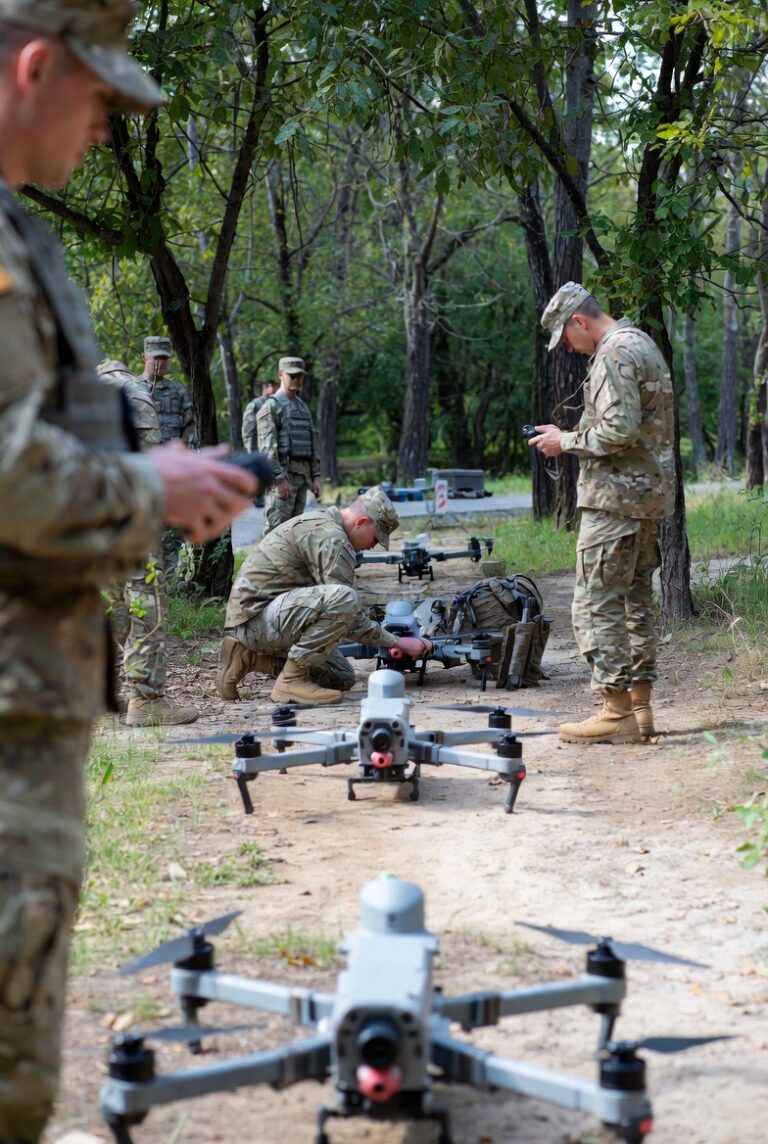
A company that started building drones in a Saskatoon workshop in 1998 is now supplying combat-grade unmanned systems to the most elite military units in the world. In February 2026, Draganfly Inc. announced it had been selected to provide its Flex FPV drone systems and training to U.S. Air Force Special Operations Command (AFSOC) units, partnering with DelMar Aerospace at Camp Pendleton. The first training cohort began in mid-February.
This is not a one-off contract. In September 2025, the U.S. Army selected Draganfly to supply Flex FPV systems and establish on-site manufacturing at overseas military facilities. In June 2025, the company delivered its first Flex FPV units to a major U.S. prime defence contractor supporting allied land operations. A Canadian company with roughly 50 employees is now embedded in the most advanced military drone programs on the planet.
The Flex FPV: Born on the Battlefield
The Flex FPV was not designed in a boardroom. According to Draganfly CEO Cameron Chell, the system was developed and refined through direct support of frontline operations in Ukraine. That real-world testing produced something traditional defence contractors have struggled to deliver: a modular, field-repairable drone that operators can reconfigure in seconds without specialized tools.
The platform supports speeds exceeding 149 kilometres per hour and handles both traditional FPV flight and autonomous waypoint missions. For military planners, the value is one platform, many missions, minimal logistics. The U.S. military’s urgency is driven by what it has observed in Ukraine. During the Swift Response 2025 exercise in Lithuania, paratroopers built and flew their own FPV drones against autonomous targets. In August 2025, the U.S. Army achieved its first air-to-air kill using an armed FPV drone. This is no longer experimental technology. It is front-line capability, and a Canadian company is providing it.
More Than Hardware
The AFSOC contract is particularly significant because Special Operations units are among the most selective customers in the world. The partnership with DelMar Aerospace adds depth: DelMar will lead curriculum development and instruction at its Camp Pendleton range facility, covering FPV assembly, repair, flight operations, and advanced mission planning. This is not a hardware purchase. It is a capability transfer.
The U.S. Army contract goes further still. Under that agreement, Draganfly is establishing embedded manufacturing facilities at forward military bases, training soldiers to build and maintain the systems themselves. If troops can manufacture and repair drones in-theatre with NDAA-compliant components, they eliminate dependence on supply chains stretching thousands of kilometres. That is the critical lesson of modern conflict, and a Canadian company is helping solve it.
What This Means for Canada’s Drone Industry
Draganfly’s arc from Saskatoon startup to AFSOC supplier tells a broader story. The company built the world’s first commercial six-rotor helicopter, achieved the first search and rescue save using a small UAS in Nova Scotia, earned a Smithsonian exhibit, and won Canada’s Ernest C. Manning Innovation Award. All before the military contracts.
What changed was the battlefield. Ukraine proved that small, modular drones operated by trained soldiers are a strategic necessity. The technology Canadian companies had been refining for decades became exactly what the world’s most powerful military needed. With Canada’s Budget 2025 committing $81.8 billion over five years to defence and a new Defence Investment Agency accelerating procurement, the domestic market opportunity is growing in parallel.
For Canadian drone companies, training providers, and operators, the message is clear. The defence market is real, it is growing, and it favours companies that combine proven technology with operational training. Draganfly has shown what that looks like. The rest of the industry should be paying attention.