
Ottawa Has Rewritten the Rules on Defence Contractor Credits — Where Does Drone Operator Training Fit?
Canada’s Industrial and Technological Benefits (ITB) Policy is being modernized. Following the Defence Industrial Strategy of February 17, 2026, the government has announced a new 5x multiplier for investments in skills development and training, and an increase in the multiplier for Indigenous workforce development to 10x — the largest multiplier available under the ITB Policy. The strategy also names Uncrewed and Autonomous Systems and Training and Simulation as two of the ten Sovereign Capabilities that ITB investments will be directed toward. Whether civil drone operator training counts toward either capability, and whether it is showing up in Value Propositions, is an open question.
What the Policy Requires
The ITB Policy contractually requires companies awarded defence procurement contracts to undertake business activity in Canada equal to the value of the contracts they have won. The policy applies by default to all defence and Canadian Coast Guard procurements over $100 million that are not subject to trade agreements, and procurements between $25 million and $100 million are reviewed for possible application. Under the modernized policy, Canada will direct those investments toward areas of national strength — the ten Sovereign Capabilities named in the Defence Industrial Strategy. Skills Development and Training is one of five Value Proposition pillars, described as filling skills and training gaps within the Canadian economy. A 5x credit multiplier on that pillar changes the arithmetic of building a compliant Value Proposition.
Where Drone Operator Training Fits the Sovereign Capability Framework
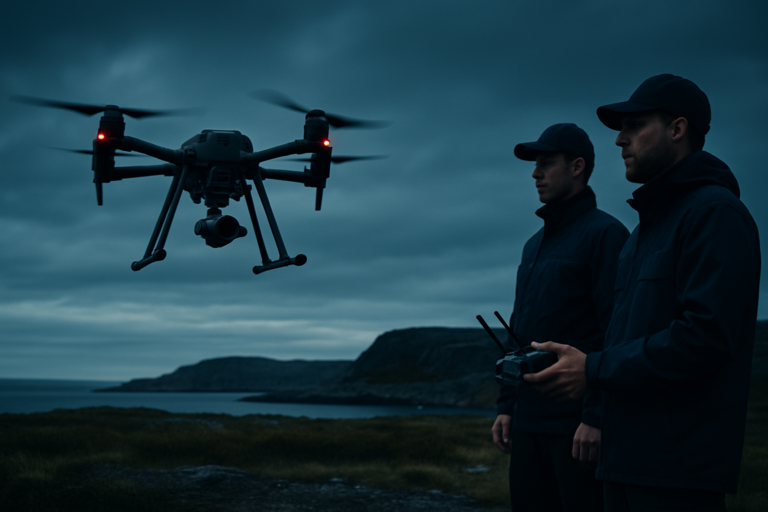
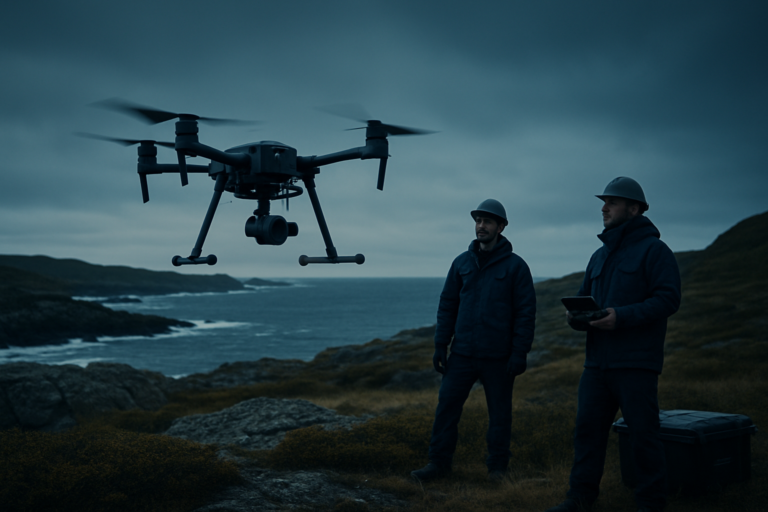
The Defence Industrial Strategy states that Canada is a world leader in training and simulation, and that drone technology is advancing rapidly and changing the nature of war. The strategy commits $105 million over three years to a Drone Innovation Hub at the National Research Council, with locations in Ottawa and the Mirabel area, to advance research, development, and commercialization of drone technologies for Canada’s defence, security, and dual-use sectors. The strategy’s ten Sovereign Capabilities include Training and Simulation — covering naval, land, and air domains — and Uncrewed and Autonomous Systems, covering uncrewed and autonomous land, aerial, underwater, and surface systems including uncrewed collaborative platforms. The question is whether civil drone operator training counts toward either. Transport Canada’s Level 1 Complex pathway — the civil BVLOS certification requiring an Advanced pilot certificate, ground school, a separate TC-administered exam, and an in-person flight review — produces pilots who operate under an RPAS Operator Certificate. As of August 13, 2026, Transport Canada had issued 709 Level 1 Complex pilot certificates and 615 active RPAS Operator Certificates. Whether a skills-development investment in that civil operator base would qualify for the new training multiplier is the open question.
The Decision Prime Contractors Have Not Yet Made
The Defence Industrial Strategy was released February 17, 2026, with $81.8 billion pledged to defence investment and $6.6 billion allocated to the strategy itself. Authority for the ITB Policy moved from ISED to the Defence Investment Agency effective July 16, 2026 (Canada Gazette SI/2026-42). The strategy states that the existing Key Industrial Capabilities need to be updated and aligned to Canada’s Sovereign Capabilities, and acknowledges scope to adjust how the Value Proposition is scored to better support its objectives. It made the case for re-examining the multiplier for skills development and training and for increasing the Indigenous multiplier, and the government has since announced both. Canada is also introducing a new Strategic Investment Transaction providing enhanced, multiplied credits for cash and in-kind investments that meaningfully expand industrial output, including advancing R&D and commercialization. The pieces are lining up. We found no government document that says whether prime contractors are building civil drone operator training into their Value Propositions — that is the gap. If you run a prime contractor’s benefits plan, where does drone operator training sit in it?
Continue the Conversation
The Clarion Professional Network is where practitioners working across defence, government, and civil RPAS talk through exactly this kind of policy-to-operations gap. If you are building a benefits plan, certifying a drone workforce, or advising a prime on ITB obligations, come have the conversation with people already in it.