A Drone Grounded Wildfire Aircraft in Peachland. Seven Months After C-15, Here Is What the Public Record Shows About Stopping the Next One
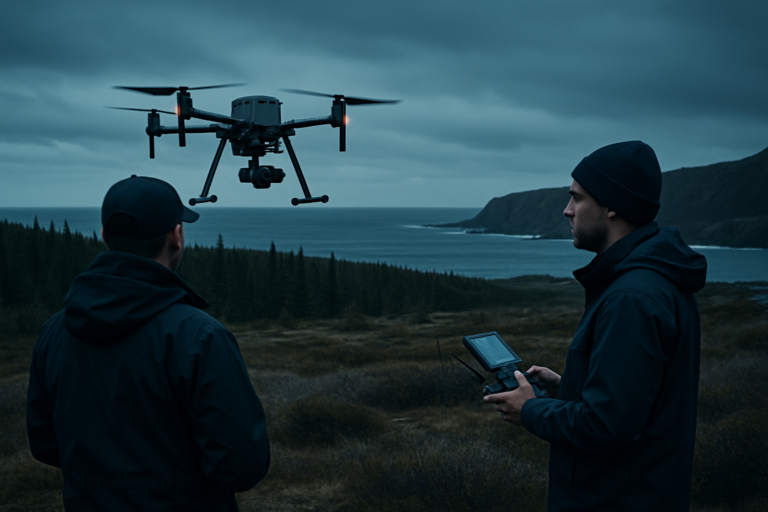
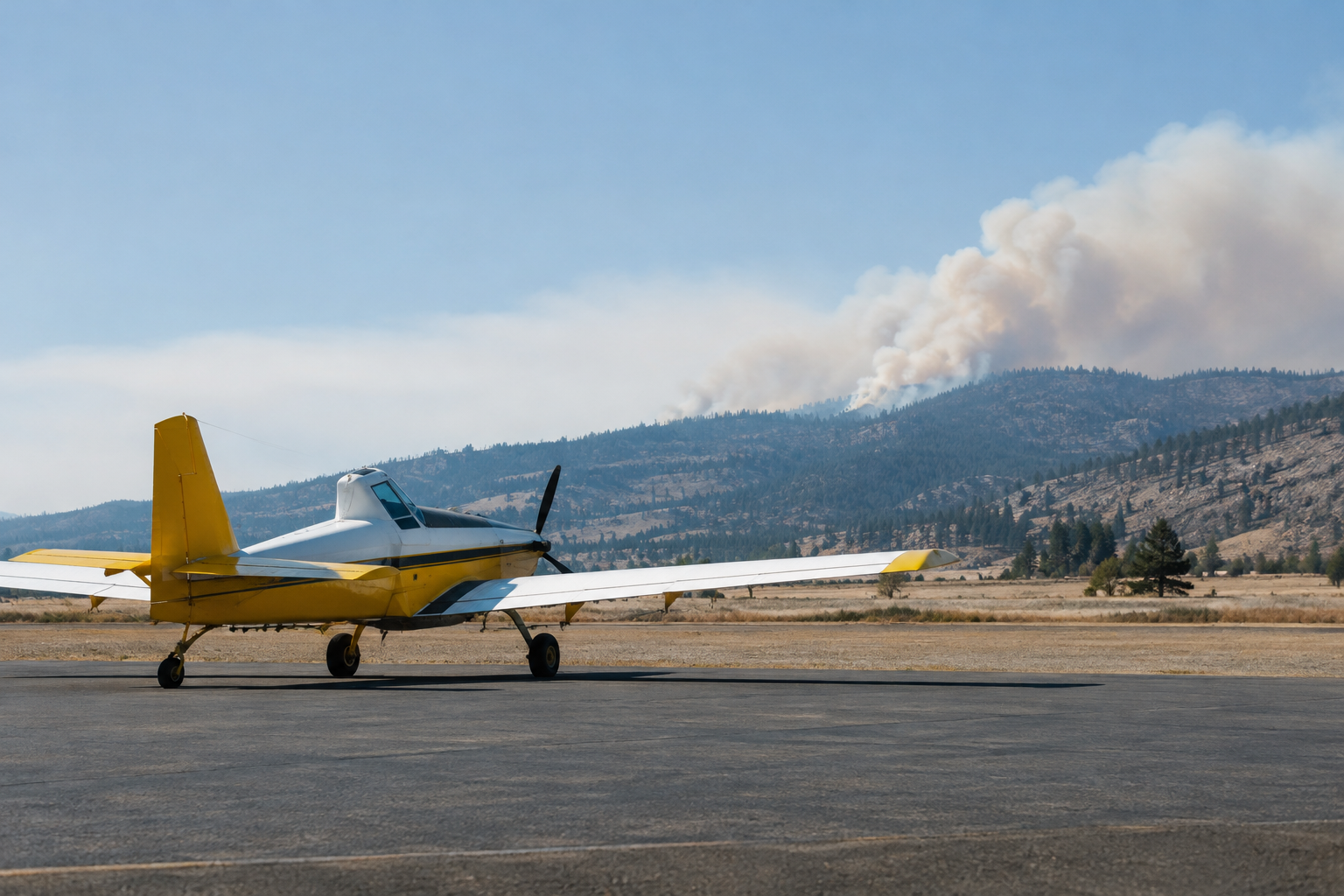
On August 25, 2026, BC Wildfire Service aerial resources responding to a fire in Peachland were grounded after a drone was spotted in the area. The fire was 0.7 hectares, was brought under control within several hours, and was human-caused. Parliament had given the Minister of Transport authority to authorize interference with drones five months earlier, on March 26, 2026. That gap — authority granted, aircraft grounded anyway — is the subject of this article.
What the Law Now Says
Bill C-15 received royal assent on March 26, 2026 as S.C. 2026, c. 3. The act added section 7.3(1)(d.1) to the Aeronautics Act, making it an offence to intentionally interfere with the operation of a remotely piloted aircraft system while it is powered on, except as authorized under that Part. Section 7.42 gives the Minister of Transport authority to authorize any person or class of persons to interfere with a drone on any terms the Minister considers appropriate, if the authorization is in the public interest or necessary for aviation safety or security. The act also includes a defence exception: section 7.3(1.1) provides that the interference prohibition does not apply to a person who is carrying out activities that they are authorized to carry out for the purpose of defence. Transport Canada’s April 2026 Drone Zone newsletter described the policy framework as aiming to support law enforcement and other agencies with the necessary tools to identify and respond to threats posed by unauthorized drone operations.
Section 7.42(1) says the Minister “may” authorize on any terms the Minister considers appropriate; the subsection says nothing about publication. That matters for what follows: finding no record does not prove no authorization exists. We found no public record of any Transport Canada section 7.42 authorization in this research run.
What the Public Record Actually Shows
Transport Canada’s own Q&A page on the bill, last modified June 19, 2026, describes the authorization side in future terms. That page uses conditional language — “the proposed amendments would prohibit,” “Transport Canada would continue developing” — language consistent with a document written before royal assent. The same page says Transport Canada would work with the RCMP and other government departments to establish new means of authorizing specific entities such as law enforcement to carry out safe counter-drone operations. The page still describes the Drone Security Program and Countermeasure Strategy as proposed.
We found no public record of any authorization under section 7.42, and the Q&A page describes the authorization framework in prospective terms.
Outside section 7.42, some lawful instruments do exist. The RCMP is the only law enforcement agency that has been issued an exemption order from the jammer-related prohibitions in the Radiocommunication Act. Three such exemption orders have been issued: to the RCMP, to the Department of National Defence and the Canadian Armed Forces, and to certain correctional services. In October 2026, Canada Gazette Part I published a proposed Radiocommunication Act Exemption Order that would exempt 27 law enforcement agencies listed in its schedule from the same jammer prohibitions; that order would come into force upon registration. These exemptions exist under the Radiocommunication Act, not under section 7.42 of the Aeronautics Act.
The defence exception in section 7.3(1.1) covers persons authorized to act for the purpose of defence, but the statute does not further define the scope of “authorized” or “for the purpose of defence” on the face of that section. The open question is whether a civil wildfire agency could ever fall within it.
What Prosecution Has Delivered — and What It Cannot Do in Real Time
The enforcement track is real. In March 2026, a Kelowna man was sentenced in provincial court after being found guilty on February 9 under BC’s Wildfire Act for interfering with a helicopter responding to the 2023 McDougall Creek wildfire. He was ordered to pay a $5,000 fine. The court found that his actions distracted the helicopter pilot for a brief time, and took into account that it was a first offence and that he had been cooperative when authorities approached him. Under the Wildfire Act, provisions exist to impose fines up to $100,000, up to one year in jail, or both. Under the Canadian Aviation Regulations, every wildfire carries a flight restriction of five nautical miles and up to 3,000 feet above ground level, and drone operators face stiff fines and potential criminal charges for impeding firefighting efforts. BC’s minister of forests, Ravi Parmar, acknowledged the McDougall Creek sentencing and respected the court’s decision.
After-the-fact prosecution is a working tool. But it did not keep BC Wildfire Service aircraft in the air over Peachland on August 25, 2026. That is the operational gap. Section 7.42 gives the Minister authority to close it. We found no public record of a section 7.42 authorization, so the question for your agency is this: what do you do when a drone shows up over a fire?
What Your Agency Can Control Today
Until the public record changes, an agency’s real-time options are the ones it controls itself: a written procedure for the moment a drone is spotted. That means knowing who makes the call to ground aircraft and when it is safe to resume, how the sighting is reported and to whom, how crews work to locate the operator, and how evidence — photos, video, times and positions — is preserved so a prosecution like McDougall Creek can follow. Those procedures have to be written and practised before the fire, not worked out during it.
Clarion Drone Academy provides RPAS training and consulting to government, military and law enforcement clients. If your agency wants help building or testing a drone incursion procedure, contact us at clariondrones.com.
Continue the Conversation
The Clarion Professional Network is where government, law enforcement, and public safety drone operators talk through exactly these kinds of operational and regulatory gaps — before they show up on a fireground. If that is the conversation your agency needs to be part of, come join us.