Canada Awards Arctic Military Satellite Contract; Telesat States Service Begins in 2028. National Defence Says Connectivity Is a Challenge for Arctic Drones.
On August 4, 2026, the Defence Investment Agency awarded Telesat an approximately $2.3 billion initial contract for the Enhanced Satellite Communications Project – Polar (ESCP-P). Telesat states service under the contract begins in 2028. Twenty-seven days later, National Defence published an article stating plainly that Arctic connectivity is challenging for drones — with less reliable satellite coverage and degraded GPS signals — and that autonomous drones capable of continuing to function when links to operators are disrupted are “future systems.” The gap between those two facts is the story.
What the Contract Actually Covers
The ESCP-P award is real and significant. The DIA contract delivers the first phase of next-generation military satellite communications for the Canadian Armed Forces through the Telesat Lightspeed LEO constellation. Telesat states the contract is for 15 years of service including option years, with the expected start of Telesat Lightspeed global service delivery remaining on track for Q1 2028. The contract also includes two option periods of approximately $214 million and $218 million. Under the agreement, Telesat states it will deliver Mil-Ka connectivity across Canada’s Arctic region to the CAF, spanning 65 to 90 degrees North latitude.
The news release states that ESCP-P will also include a UHF and X-band constellation in Medium Earth Orbit, with MDA Space as prime contractor. The DIA backgrounder confirms that a future procurement will focus on the MEO component delivering secure X-band and UHF communications particularly north of 65 degrees latitude — the capability described as expected to address persistent gaps in reliable long-distance communications. As of August 4, 2026, negotiations to advance the definition and development of the UHF and X-band services were underway. The Canadian Press reported that the federal government has said the Canadian military currently has limited options for satellite communications in the Arctic.
What National Defence Says About Drones Right Now
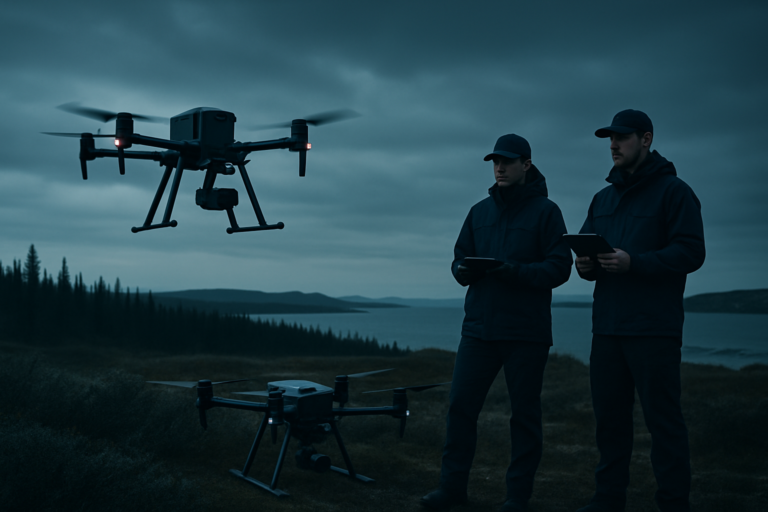
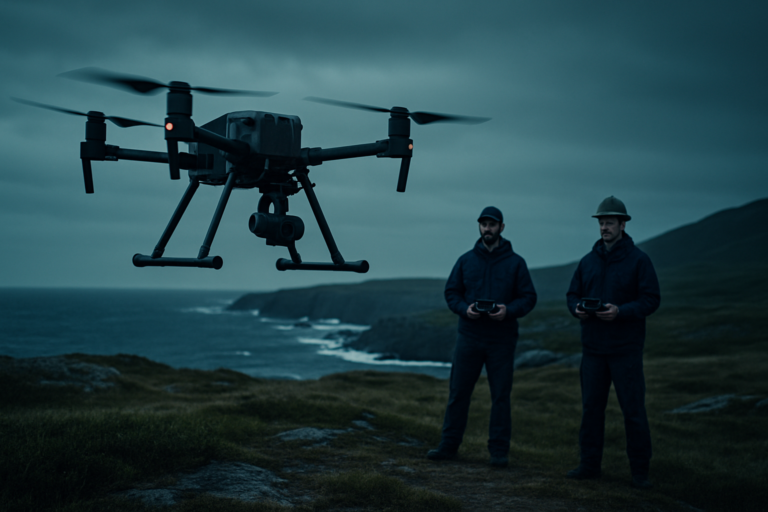
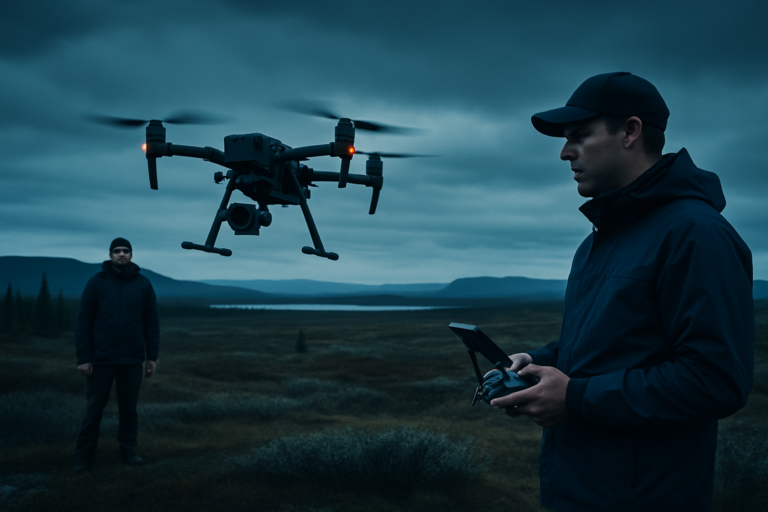
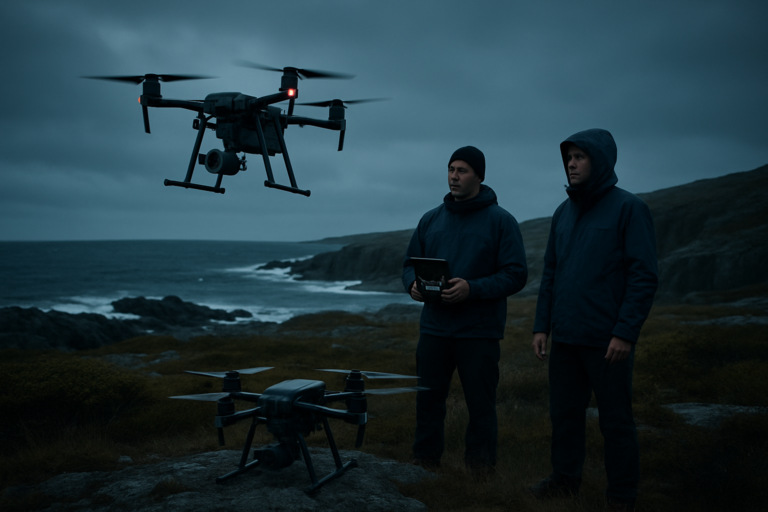
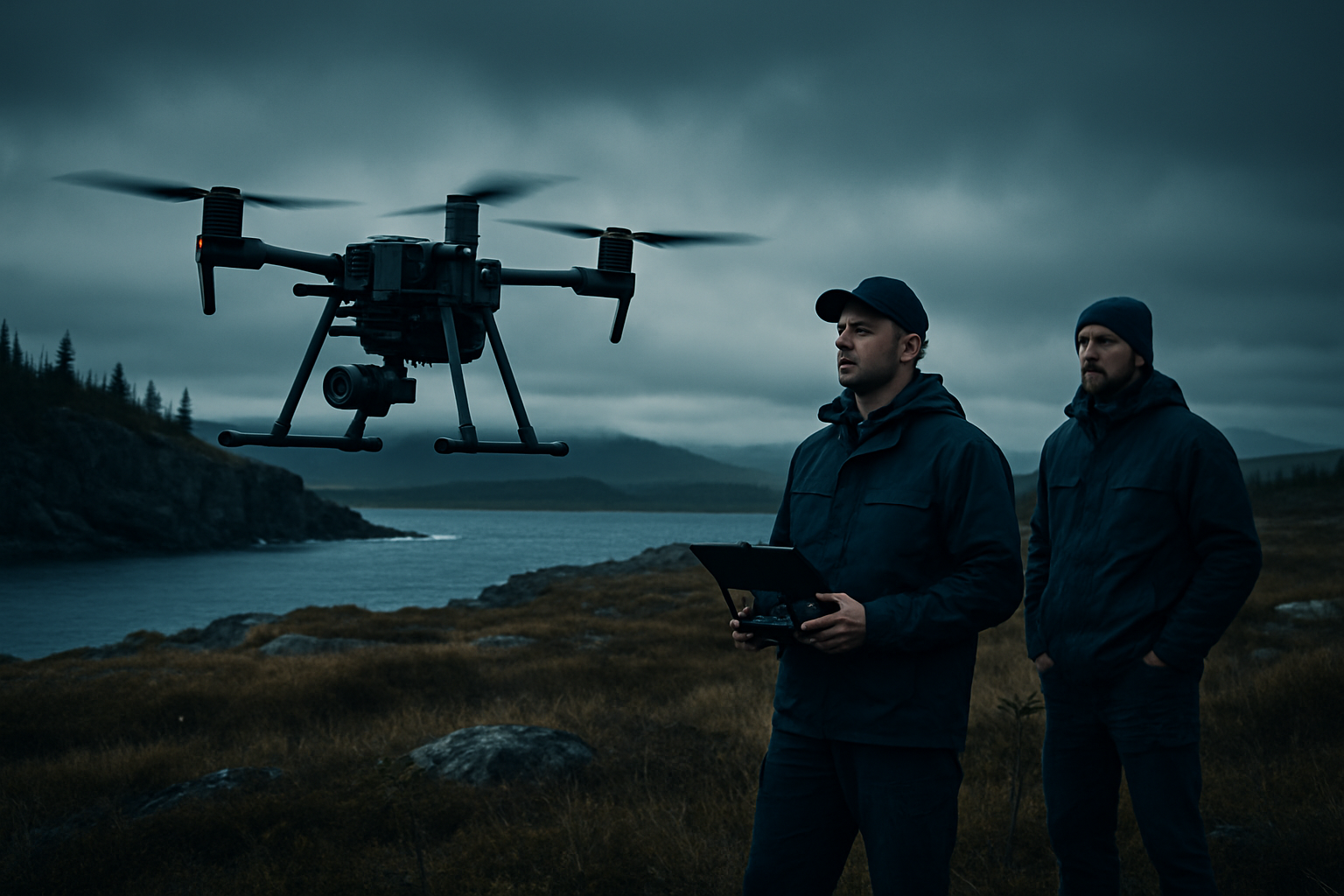
National Defence published an article on operating drones in the Arctic on August 31, 2026. National Defence states that the Arctic challenges both the drone aircraft and its connection to the operator — extreme cold often below −30°C rapidly drains batteries, and connectivity can be challenging with less reliable satellite coverage and degraded GPS signals. DRDC is testing autonomous systems during exercises such as Operation NANOOK, evaluating navigation in GPS-denied environments and resilient operations when communications are disrupted. The article is direct: future systems will be able to carry out tasks and continue functioning even when links to operators are disrupted. That phrasing places persistent lost-link autonomy firmly in the future, not the present.
National Defence also states that drones play an important role in Canada’s NORAD modernization plan. DRDC’s work advancing drone capabilities will be accelerated through the new BOREALIS UxS Defence Innovation Secure Hub. The BOREALIS UxS DISH, led by an Espace Aéro consortium, is to receive $29.6 million over two years, as announced July 14, 2026. The MINERVA Initiative Arctic UAS challenge reflects the same gap from the procurement side: the challenge document states that the Canadian Army presently lacks a UAS capable of conducting intelligence, surveillance, and reconnaissance in Arctic conditions.
The Gap the Investment Has Not Yet Closed
Here is where the two threads converge into a planning problem. As of October 3, 2026, neither the DIA news release, the DIA backgrounder, nor the Telesat press release mentions drones, uncrewed aircraft, or remotely piloted aircraft systems in the context of ESCP-P. As of October 3, 2026, we found no publicly documented link between the satellite program and the drone development program.
The Mil-Ka service Telesat states will begin in 2028 covers 65 to 90 degrees North latitude. The MEO component — which the DIA backgrounder says is expected to address persistent gaps in reliable long-distance communications, particularly north of 65 degrees latitude — is to be the focus of a future procurement, and as of August 4, 2026 negotiations on the UHF and X-band services were underway. Canadian Armed Forces drone operations are conducted under National Defence authority, not under Transport Canada’s civil certification framework.
National Defence has named the challenge, funded the research hub, and launched the procurement challenge. The open question is when the autonomous lost-link capability DRDC describes for future systems will be operational. Until that capability is fielded, what are the people flying drones in the North trained to do when the link or the GPS degrades?
Continue the Conversation
The Clarion Professional Network is where government, military, and civil BVLOS practitioners are already working through questions like this — connectivity architecture, lost-link contingencies, and what regulatory and operational readiness actually looks like in demanding environments. If that is the conversation you need to be in, come join us.